
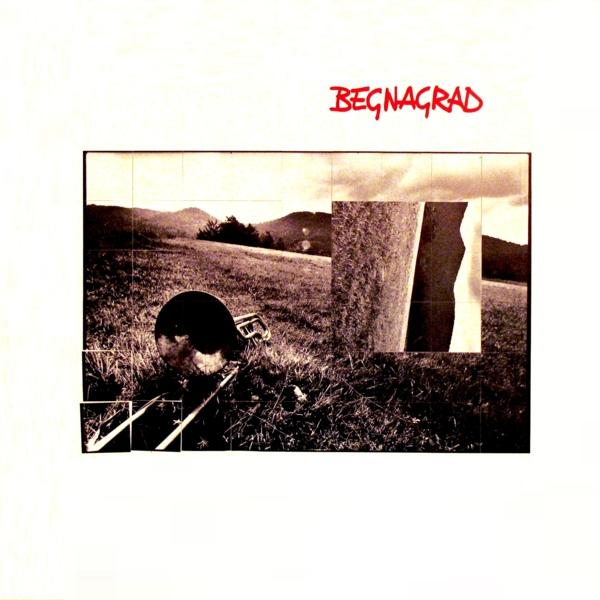
Begnagrad was formed in Ljubljana in 1976, and the band’s debut album — released in 1982 — still feels surreal to this day. Their lineup was fluid, but the core of the group included Bratko Bibič (accordion), Bogo Pečnikar (clarinet), Vlado Špindler (bass), and Igor Muševič (drums), with guitarists like Bojan Zidarić and Boris Romih appearing across different sessions. The album itself was recorded with a lineup featuring Bibič, Pečnikar, Romih, Nino de Gleria (bass), and Aleš Rendla (drums/violin).
Begnagrad’s work stood at the intersection of Balkan folk, free jazz, and experimental rock, successfully creating a sound that was daunting yet familiar. Their work is often associated with the Rock In Opposition (RIO) movement — a loose coalition of bands who rejected the commercial logic of record labels and embraced artistic freedom, unconventional structures, and improvisation. RIO’s philosophy was almost anti-genre: it existed in opposition to whatever was popular or expected. In that sense, it’s almost funny to consider that RIO rebelled against punk — a rebellion in itself against the mainstream.
Begnagrad’s experimental debut is deliberately difficult, satirical, and often absurd — the kind of music that makes you laugh and feel unsettled at the same time.
Drinking One kicks off side A with an almost comical, cartoonish jazz romp, but it quickly turns bizarre. The track feels like a Kafkaesque night out with friends that slowly descends into chaos: the table is flooded with drinks, the mood darkens, inhibition is impaired, and the music becomes increasingly dissonant. The intensity rises until the song feels like a trap with no escape — no comfort, no familiar respite, but in an awkward and strangely compelling manner.
The second ‘one’ — Romantic One — opens atmospherically, filled with Eastern folk melodies and melancholy. The tempo rises, but the track remains rooted in Balkan folk tradition. What’s striking is how naturally the band mixes folk with avant-garde jazz and classical textures. Begnagrad feel supremely ahead of their time — the album could easily pass for a modern release. And if people call it “prog,” it’s only because prog matches the album’s boundary-pushing ambition and complexity. Still, Begnagrad’s self-titled LP is much more improvised and unpredictable than typical progressive rock.

All’s Good (Maybe) is one of the album’s most accessible moments — a wild blend of folk, prog, and rock that somehow works. I found that the album’s chaotic nature takes time to get used to, but once it connects, this track starts to feel like a strange addiction. Think of your first sip of beer or coffee: bitter and strange at first, before dependence emerges.
Cosa Nostra / Walt is playful, abstract, and strangely lighthearted. Some experimental music can feel like a punishment — abrasive and relentless, but here the musicians taunt us with instrumental choices so weird that you can’t help but laugh.
National One / Knecht Ska hits like sensory overload, removing any notions of comfort after that previous track, but even then, the complete juxtaposition of the two is hilarious in itself. Within 30 seconds, the track throws a range of rhythms, instruments, and ideas at you — jarring, challenging, but compelling.
The album closes with the brutal, surreal Coc’n Rolla (Ljubljana by Night) — opening with a shriek that immediately throws you into the deep end. The track stays intense and off-kilter throughout, using unusual time signatures and strange instrumental pairings. The guitar work is technical and sharp, and the accordion adds a slightly comic, almost absurd edge.
Begnagrad’s debut is easily described as chaotic, unpredictable, and often uncomfortable, but simultaneously, there’s an exploration of interesting ideas and a challenging narrative to be enjoyed. It’s the sound of a band refusing to settle for the commercial sound, choosing instead to create a world where folk melodies collide with technical free jazz, where chaos is pacified, and where absurdity is embraced.
If you’re looking for a record that challenges you, surprises you, and keeps you off balance, Begnagrad is a rare gem of Yugoslav avant-prog — a weirdly brilliant and strangely humorous exploration of what music can be when the standard formula is thrown out the window.