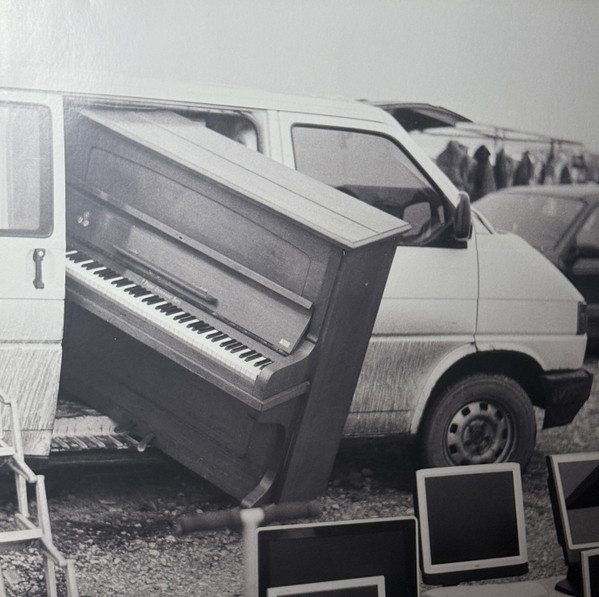

Goran Bregović’s Alkohol is a record that exposes a recurring problem in Western music criticism: the enthusiastic praise of “exotic” non-English music without any meaningful cultural, historical, or artistic context. Upon release, the album was widely reviewed positively, often framed as a vibrant, pan-Balkan celebration of folk tradition and drunken revelry. But a closer look reveals a project that is shallow, commercially opportunistic, and surprisingly lazy — especially coming from a figure as historically significant as Bregović.
For listeners unfamiliar with his past, Alkohol may register as infectious, high-energy “gypsy music” suitable for festivals and parties. For anyone aware of Bregović’s roots — as the principal songwriter of Bijelo Dugme, one of the most important rock bands in Yugoslav history — the album feels facile and undercooked.
The opening track, Jeremija, is a cover of a Serbian folk song, presented with bombast and brass-heavy triumphalism. It’s lively and crowd-pleasing, but musically uninventive. Rather than reinterpreting or deepening the material, Bregović flattens it into a generic introduction to “gypsy music” — an aesthetic shorthand that prioritises surface energy over substance. This approach sets the tone for much of the record.
Tracks like Paradehtika and Venzinatiko continue in the same vein, recycling familiar Balkan and Romani motifs without offering meaningful variation or insight. The music is functional, festive, and instantly digestible — but emotionally hollow. There is little sense of dialogue or genuine engagement with the traditions being invoked — or, more accurately, extracted.
The album’s lack of ambition becomes impossible to ignore once the covers start piling on. Na Zadnjem Sjedištu Moga Auta, Ružica, and Za Esmu are all Bijelo Dugme songs — Bregović covering himself, repeatedly. In an album that barely stretches past forty minutes, dedicating nearly a quarter of the runtime to recycled material feels inexcusable. These versions add nothing new; they are weaker, more bloated, and stripped of the urgency that once made the originals compelling.
Elsewhere, the record dips into outright bad taste. Zamisli veers into cheap pop-folk territory, devoid of irony or depth. Gas, Gas (a reworking of the eurodance hit popularised by Shantel and later Severina) is novelty music at best — amusing only under the influence and deeply grating otherwise.
Songs like Šoferska briefly inject some energy, but even here the problem persists: these interpretations feel superficial and interchangeable. Anyone genuinely interested in Romani music would be far better served listening to actual Romani musicians and groups rather than Bregović’s derivative, commercial tracks.
Reading critic reviews of the record online is where the critical failure surrounding Alkohol becomes most glaring. Reviews like AllMusic’s 8/10 rating praise the album’s vitality while completely ignoring the fact that nearly half of it consists of covers, self-covers, or culturally detached reinterpretations. There is no serious engagement with Bregović’s background, no distinction between Romani traditions and his Sarajevo rock lineage, and no questioning of authorship or intent.
Alkohol succeeds as party music precisely because it demands nothing from the listener. But popularity and energy should not be confused with artistic merit. What could have been a thoughtful engagement with Balkan musical traditions instead feels like a random tracklist assembled for swift consumption and easy profit — a model increasingly common in the music marketplace.
In the end, Alkohol is not an interesting album. It demonstrates how Western criticism often rewards the appearance of diversity while overlooking context, authorship, and intent. When music from outside the Anglo-American canon is judged primarily on how “fun” or “exotic” it sounds, it is reduced to surface-level spectacle — allowing albums like this to coast on reputation alone while far more meaningful works remain overlooked.