
“Dobio sam sina, posadio sam drvo, napisao sam knjigu — još samo da tebe čujem uživo.”
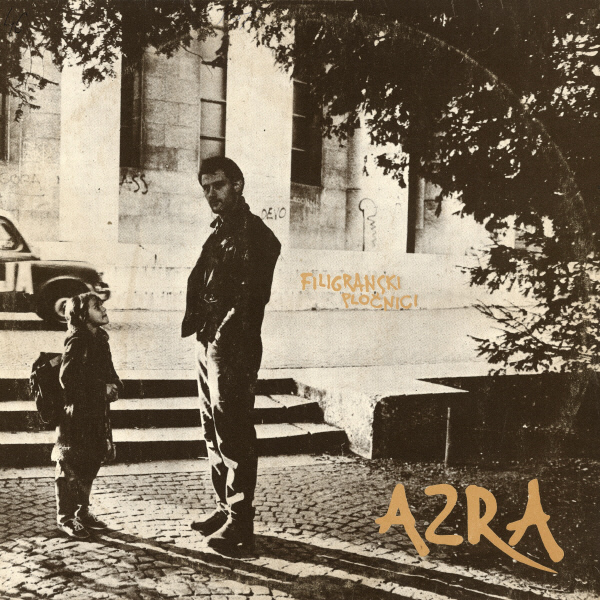
That YouTube comment captures the emotional weight Filigranski pločnici still carries decades after its release. Forming a document of urban youth, politics, lust, disillusionment, and stubborn idealism, stretched across more than twenty tracks — it’s a sprawling, uneven, and sometimes overwhelming masterpiece. Without hesitation, Filigranski pločnici stands as one of the great epics of Ex-YU rock.
After underestimating the tightly focused brilliance of Sunčana strana ulice, diving into Filigranski pločnici was never going to be an easy task. It would require patience and attention — a clean palette, curiosity, and a willingness to sit with Štulić’s irony, satire, and relentless lyrical allegory that winds itself through narrow avenues. Blues rock rubs shoulders with DIY punk, folk ballads dissolve into pop-rock with ska and two-tone rhythms, while everything is held together by Štulić’s singular voice — sharp, poetic, and confrontational.
Whether Filigranski pločnici is “better” than Sunčana strana ulice is beside the point. They feel like companion pieces. Where Sunčana burns with youthful momentum, Filigranski feels more mature, more introspective, and more politically layered.
The opening track, Tko to tamo pjeva, wastes no time as a ferocious, chaotic burst of punk rock and blues-inflected swagger drops the listener straight into Azra’s urban world. There’s humour, menace, and ambiguity here with something unsettling beneath the surface as it captrues the uneasy transformation of revolutionary energy into bureaucratic stagnation.

’68 follows as one of the album’s most poignant political reflections. With brass, organ, and theatrical vocals, it foreshadows the artistic edges of Haustor while retaining punk’s bite. The later track Hladan kao led is similar in this sense. The lyrics sketch a former revolutionary who has settled into a safe, miserable normality — a critique of abandoned ideals that feels timeless. The refrain about ’68 returning carries both hope and deep skepticism. Will it return — or has comfort won?
Volim te kad pričaš softens the palette, with gentle flute lines and a tender, understated intimacy. It’s a love song without grand gestures, while Ne prodajem nasmiješenog psa leans into cryptic, poetic melancholy, reinforcing how often Štulić blurs the line between romance and alienation. Kao ti i ja extends this emotional register with a sensual atmosphere, its saxophone and blues-soaked guitar work among the album’s most musically expressive moments — an underrated highlight.
One of the record’s most symbolically dense moments arrives with Proljeće je 13. u decembru. Like much of Štulić’s writing, the title invites layered interpretation. Whether read through Poland’s 1981 martial law, broader Eastern European unrest, or the suppressed ideals of the Croatian Spring, the song frames hope as something barricaded — “Proljeće stoji iza barikade” reading like a quiet warning.
Political irony resurfaces in I nikom nije ljepše neg’ nam, a deceptively catchy pop-rock track built around a love for football and also some fatherly love. Beneath its surface cheer lies a bitterly ironic echo of society, subordination and authority. Štulić twists it into commentary on complacency, exposing the fragile comfort of collective society convinced of its own contentment and identity.
The enigmatic Pavel deepens the album’s ideological thread. Over beautiful synth textures, Štulić interrogates generational patriotism and revolutionary identity:
Govoriš mi o ideji / o patriotizmu generacije…
The titular figure remains deliberately ambiguous. Whether interpreted as a composite revolutionary, a Paris-educated intellectual, or an echo of historical idealists like Koča Popović, the song resists biographical certainty. The significance lies in the tension between idealism and futility — what happens in the afterlife of youthful revolution?
At the album’s emotional centre sits Ako znaš bilo što — one of the greatest songs in Ex-Yugoslav history. A love song, philosophical meditation, and reflection on freedom, it’s here that Štulić’s lyrical ambition and musical sensitivity fully converge. The saxophone solo feels celestial, and the song’s emotional gravity is undeniable. This is where Azra transcend scene and era, placing Štulić alongside writers like Dylan or Cohen — artists who understood that poetry and songcraft must rise together. The YouTube comments alone testify to how deeply this song is woven into personal memory.
Elsewhere, Ljudi samoće captures the paranoia and loneliness of city life — drifting through crowds, brushing against strangers and fleeting connections. Roll Over Jura, with biting sax and sharp humour, delivers a satirical jab at former bandmate Jura Stublić while doubling as commentary on fame and artistic divergence. Iran briefly expands the album’s sonic geography, introducing worldly textures that hint at Azra’s outward gaze. Naizgled lijepa slows the pace into bluesy, psychedelic introspection, its distorted vocals and striking guitar solo underscoring the band’s stylistic breadth.
Sonically, Filigranski pločnici mirrors its thematic sprawl. The production is rough, occasionally cluttered, but that looseness becomes part of the album’s character as Azra sound like a restless live band caught in motion rather than an overly produced studio project.
Taken as a whole, Filigranski is vast, messy, ambitious, and deeply alive. It moves through Zagreb streets and inner monologues alike; touching on love, lust, frustration, politics, youth, reform, and the quiet dread of compromise. The saxophones, ska rhythms, blues riffs, folk ballads add an instrumental richness, with everything serving the poetic writing. Its length and looseness will alienate some listeners. There are moments where ideas repeat and momentum drifts, but these imperfections are inseparable from the album’s identity.
Far from a perfect album in the technical sense — the production is lacking and the track-list is bloated. Still, few albums in Ex-Yugoslav rock have been internalised like Filigranski pločnici. Its songs were examined in teenage bedrooms, its ballads became reminiscent of lost loves, and its contradictions — romantic and revolutionary — shaped the vocabulary of countless artists who followed. Azra’s third record endures as a living, restless work that will forever demand to be heard and analysed in full.