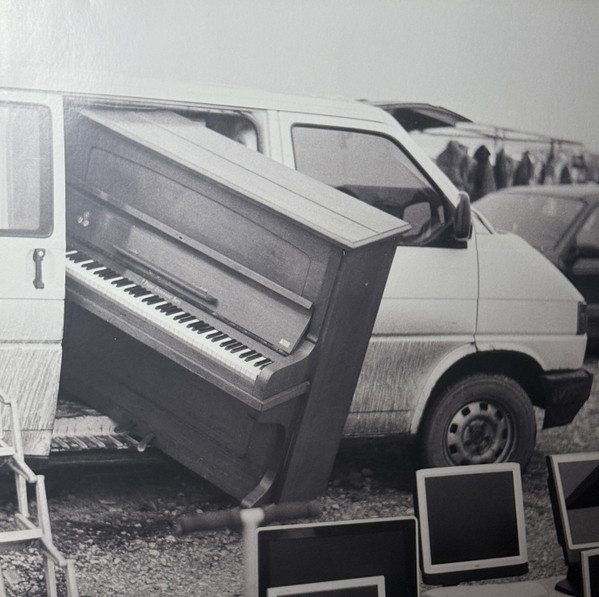

Sončna Pot’s lone self-titled album from 1979 occupies a small but fascinating corner of Yugoslav progressive music. Formed by saxophonist and composer Lado Jakša — known for his work with Predmestje, Sedmina, and Buldožer — alongside drummer Ratko Divjak (ex-Time) and bassist Jordan Gančev, the trio was among the earliest groups in the region to seriously explore ethno-inflected jazz fusion. The result is a delicate, atmospheric record that mirrors the softness of its cover art: introspective, textural, and quietly ambitious.
The album opens with the eleven-minute Hrepenenje, a slow-burning odyssey that establishes the trio’s aesthetic. It begins in a tense, sorrowful haze before gradually descending into controlled chaos, with Gančev’s bass providing a constant, grounding pulse. Jakša’s saxophone lines carry a distinct ethno-fusion flavour, at times recalling the angular anxiety of Miles Davis’ electric period, while hints of funk ripple beneath the surface. Although the track occasionally feels overextended, its evolving textures and melancholic sax passages — especially in the closing section — give it emotional weight.
Na poti shifts toward a more delicate and pastoral mood. A strong, grooving bass line and gentle piano figures lend the piece a quiet funkiness, yet the overall impression is atmospheric rather than overtly rhythmic. It feels like a suspended moment: warm, airy, and full of subtle movement. The percussion becomes more appreciable here, even if the recording’s softness slightly obscures the trio’s dynamic interplay.
Side B opens with Skozi, which introduces a darker, more chaotic tension. The guitars take on an almost dystopian edge, brushing against textures that feel surprisingly modern. Despite its intriguing sonic palette, the piece is more subdued in impact, leaning toward a restrained jazz-rock balladry that prioritises mood over memorability.
The closing track, Zarek, begins in a cosmic drift of organ and spacious bass before erupting into a focused burst of guitar and drums. It then dissolves back into ethereal layers, showcasing the trio’s technical command and sensitivity to texture. The track’s ebb and flow encapsulate the album’s strengths: an emphasis on atmosphere, gradual development, and finely balanced ensemble playing.
As a whole, Sončna Pot is less about immediate hooks than about immersion. Its fusion of jazz-rock, ethno elements, and ambient space feels exploratory and understated, occasionally uneven but consistently evocative. Even when certain passages linger longer than necessary, the album remains a compelling snapshot of a brief but forward-thinking collaboration — a quietly beautiful entry in the history of Yugoslav jazz fusion.