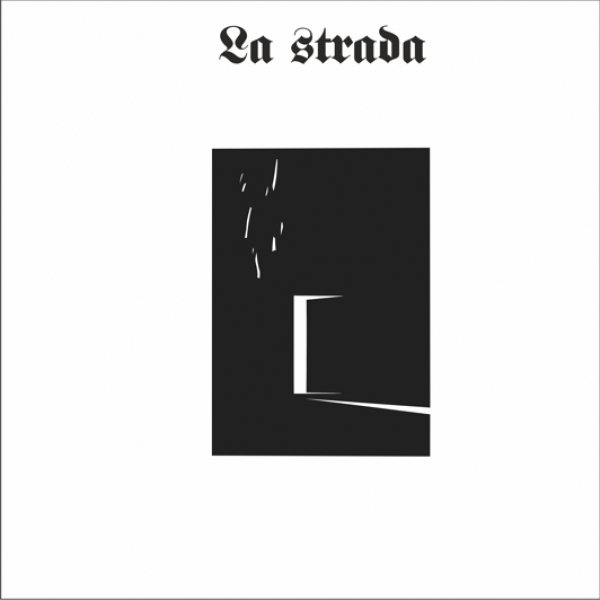
Emerging from the fertile but often overlooked Novi Sad underground, La Strada occupies a curious space in the Yugoslav new wave story. Formed by poet and musician Slobodan Tišma, the band existed in multiple incarnations throughout the early 1980s, dissolving and reforming through projects like Luna before finally releasing their self-titled debut in 1987.
Recorded quickly at Radio Novi Sad and pressed in a limited run of around 500 copies, the album feels both cold and fleeting — a snapshot of a scene that was already beginning to dissolve.
Produced by Mitar Subotić, the record sits firmly within the darker, more introspective branch of Yugoslav post-punk. Where Belgrade bands often leaned toward energy and confrontation, Novi Sad cultivated atmosphere. La Strada is built on that distinction: sparse arrangements, icy synths, and a persistent sense of distance.
The opening stretch — Mlad i radostan, Došla su tako neka vremena, Neautentični sneg — establishes the album’s core identity. Basslines are repetitive and hypnotic, drums remain tight and restrained, while Tišma’s deep, resonant vocals drift somewhere between narration and lament. The comparisons to Joy Division are unavoidable; they hold a similar emotional vocabulary expressed through a different cultural context.
There is a strong sense of longing throughout these tracks. Even when the tempo lifts, the mood remains subdued, almost detached. Lyrics circle isolation, time, and quiet resignation, giving the music a distinctly nocturnal quality — something urban, introspective, and slightly distant.
On Pesak i sunce, the band refines this formula into one of its most effective moments. Angular basslines and steady percussion anchor the track, while the vocals hover above, delivering abstract, existential fragments with understated intensity.
The second half of the album shifts direction. Tracks like Okean and Mama Luna introduce a lighter, more melodic sensibility, drawing closer to jangle pop and 1960s-influenced textures. Guitars open up, arrangements feel more spacious, and the mood becomes less oppressive — though never entirely free of melancholy. Okean in particular stands out, balancing accessibility with the band’s characteristic atmosphere.
This transition, however, also exposes some of the album’s limitations. The tighter, more immediate songwriting of the first half gives way to looser structures, and certain moments — particularly on Plavi tonik — feel less focused, drifting without the same emotional weight.
Still, these imperfections are part of what makes La Strada compelling. The album feels unpolished, almost fragile — a product of circumstance as much as intention. Recorded quickly, released in small numbers, and followed by the band’s dissolution, it captures a cold moment in Ex-YU music history.
What remains is a dark, atmospheric record that quietly defines the Novi Sad sound of the 1980s. It may not reach the originality or impact of the very top tier of Yugoslav releases, but it stands as a cult document of a specific scene — one shaped by mood, restraint, and a fascination with emotional space.