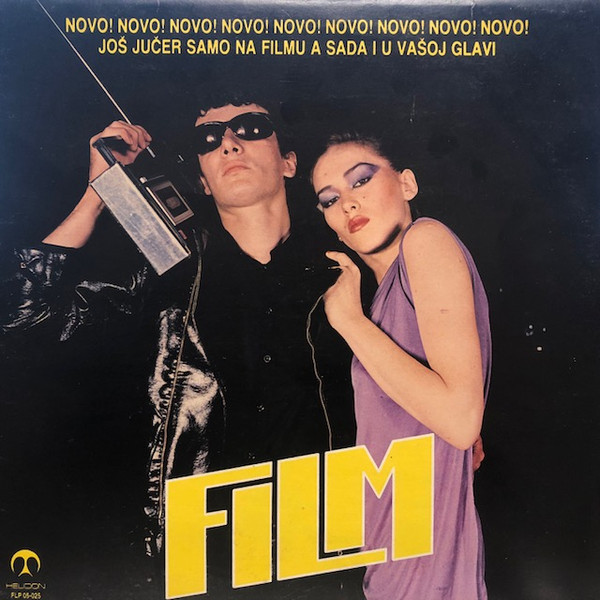
Film’s 1981 debut Još jučer samo na filmu a sada i u vašoj glavi occupies an interesting space within the Yugoslav new wave explosion. Formed by former members of Azra, the band carried over much of the Novi Val movement’s youthful energy and urban restlessness, but approached it in a softer, more accessible manner. Where Azra often feel raw, confrontational, and lyrically sharp, Film lean more into melody, groove, and pop sensibility.
Musically, the album blends new wave with touches of ska, dub, and power pop, creating a sound that feels warm, summery, and distinctly early-80s. Angular basslines, upbeat rhythms, and the prominent use of saxophone give the record a lively, youthful atmosphere that separates it from many of its contemporaries.
Opening track Neprilagođen immediately establishes that character. Built around a groovy ska-inflected rhythm and spoken-word vocals, the track carries a spirit reminiscent of Haustor, particularly through its playful use of saxophone and dub-inspired looseness. Lyrically, it functions as a small act of rebellion — the narrator throwing his radio out of the window, rejecting advertisements and conformity. It captures the youthful anti-establishment spirit central to much of the Yugoslav new wave movement, but presents it in a more relaxed and melodic form.
Mi smo pali s marsa continues in a similarly accessible direction. Its soft power-pop structure and subtle synth flourishes make it one of the album’s most immediately catchy moments. There’s still a punk spirit underneath, but it’s filtered through smoother vocals and more polished songwriting. Jura Stublić’s delivery feels gentler and more melodic than Štulić’s work in Azra, giving the track a slightly whimsical quality that would later become one of Film’s defining traits.
Tracks like Radio ljubav, Moderna djevojka, and Trgovci srećom further reinforce the album’s strengths through a combination of upbeat new wave rhythms, catchy choruses, and lively instrumentation. It’s an enjoyable listen — the basslines remain sharp and propulsive throughout, while the keys and saxophone add texture without overwhelming the tracks.
At the same time, the album does begin to lose momentum across its middle stretch. While the songwriting remains consistently pleasant, several tracks start to blur together stylistically, making the record feel somewhat repetitive. The youthful energy never disappears, but the band occasionally settles too comfortably into straightforward pop-rock structures without pushing their ideas much further.
That makes later tracks like Zamisli and particularly Ja sam tu stand out more strongly. Ja sam tu introduces a slightly different energy and urgency that the album benefits from, while Dijete ulice attempts to move closer toward a rougher punk sound. The intention is refreshing, but the instrumentation lacks the intensity needed to fully support the more aggressive vocal approach, leaving the track feeling closer to energetic power pop than true punk confrontation.
Ultimately, Još jučer samo na filmu a sada i u vašoj glavi succeeds most through its youthful charm and nostalgic atmosphere. Film occupy a middle ground between the theatrical experimentation of Haustor and the sharper lyrical edge of Azra, but never fully commit to either direction. That balance gives the album broad accessibility, though it also limits its depth compared to the very best records of the Yugoslav new wave era.
Still, even with its inconsistencies, the album remains an enjoyable and historically important debut — a youthful, catchy snapshot of the early Zagreb scene.