
Despite being labelled as punk, the Rijeka scene was never stylistically uniform. While early bands emerged from the urgency and raw energy of punk, many quickly moved towards darker, noisier, and more experimental forms: post-punk, gothic rock, synth-pop, and abrasive noise rock. In Rijeka, punk functioned less as a genre and more as an attitude — confrontational, anti-authoritarian, and defiantly unconventional.
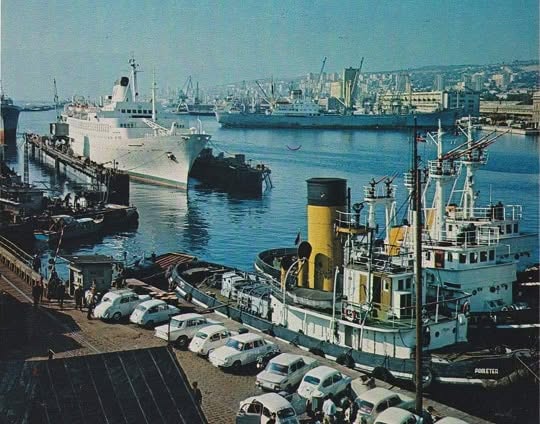
As a port city with constant exposure to Western and Central European cultural signals and a strong working-class youth presence, Rijeka’s musical ecosystem proved uniquely fertile ground for punk’s confrontational ethos. Sailors, foreign press, imported records, and radio transmissions connected the city more directly to Europe than many other Yugoslav centres. This openness, combined with a local tradition of progressiveness and dissent, allowed punk to take root quickly and mutate freely.
What began as punk’s DIY energy soon expanded into a broader culture of experimentation and provocation. From Termiti’s disruptive live philosophy to Let 3’s later absurdist performance art and Grad’s alternative rock lineage, Rijeka’s influence did not end with punk’s first wave. Instead, punk was absorbed into the wider Yugoslav Novi Val movement and embedded into the city’s alternative DNA.
“In some sort of Croatian political standard, we here in Rijeka take on more punk politics — as much as an oxymoron that is, linking politics with punk… but in Rijeka everything is possible and so is this,” reflected long-time mayor Vojko Obersnel, summarising the city’s unusual relationship with punk culture.
The Sex Pistols released Anarchy in the UK in November 1976. Only a few months later — likely December of the same year, according to Valter Kocijančić — Paraf held their first informal concert in a park near Rijeka’s city centre. That unannounced half-hour performance by Valter Kocijančić, Zdravko Čabrijan, and Dušan Ladavac is now recognised as one of the earliest punk events not only in Yugoslavia, but in Eastern Europe as a whole.
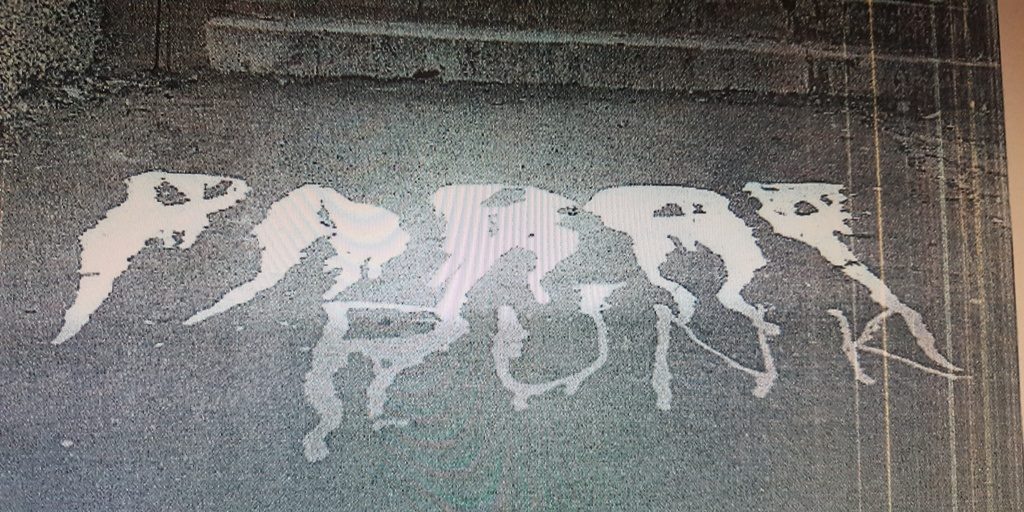
Nearby, the band scrawled the now-iconic “Paraf Punk” graffiti. What was once a fleeting act of youthful rebellion would decades later be protected as a monument of cultural significance — a rare example of punk being absorbed into official heritage without entirely losing its symbolic weight.
At the time, punk was not an easy import. Yugoslavia in the late 1970s occupied a peculiar middle ground: far more open than countries under Soviet rule, yet still governed by a one-party socialist system that discouraged overt dissent. Citizens could travel abroad and access Western culture, but speaking openly against the state remained risky. Punk’s confrontational politics and anti-authoritarian posture were therefore viewed with suspicion.
Paraf’s frontman Valter Kocijančić did not initially set out to invent punk. His early influences included hard rock acts like Slade and Alice Cooper. Through his father’s summer job selling foreign magazines along the Croatian coast, Valter gained access to the Western press he could barely read — yet the imagery and attitude left a deep impression.
“I only knew I wanted to play music,” he later recalled. “I discovered what punk was much later, when a guy from my hometown returned from London with a Sex Pistols LP.”
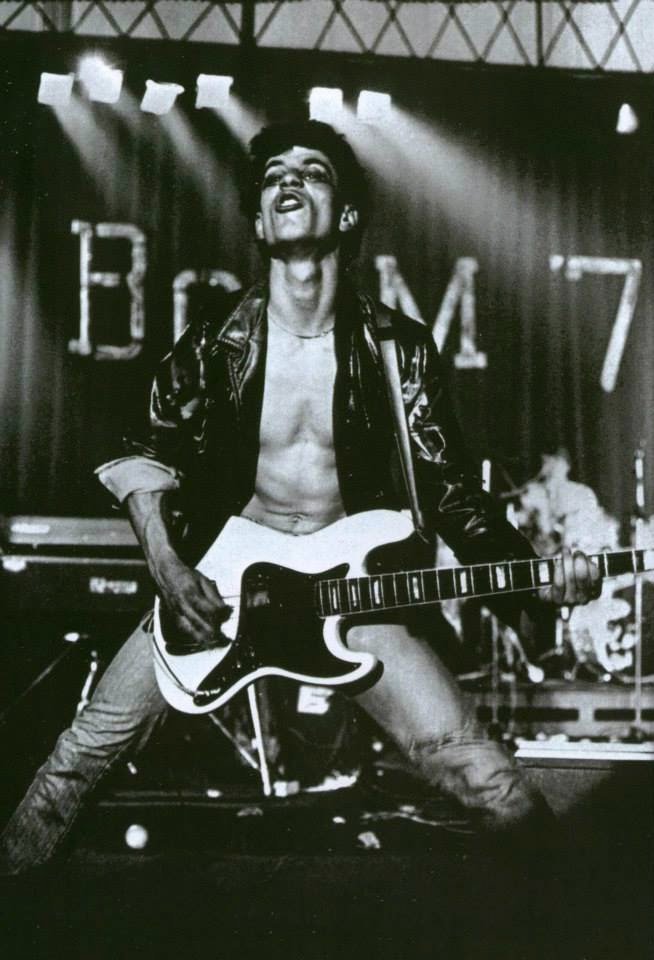
Initially composed as a trio, Paraf emerged almost in parallel with the Sex Pistols. Their debut album, A dan je tako lijepo počeo, launched a punk rupture within Yugoslav rock music. Songs such as “Rijeka,” “Narodna pjesma,” and “Živjela Jugoslavija” attacked authority, cultural stagnation, and blind obedience with a bluntness previously unheard of in domestic popular music.
The album’s impact was immediate and controversial. Nearly half of its lyrics were altered due to censorship, and the record was subjected to a “šund” tax, branding it as culturally undesirable. In retrospect, it stands as a fearless cornerstone of Croatian and Yugoslav rock history.
Themes of police authority, institutional obedience, and ideological hypocrisy run throughout the record, sounding uncannily relevant decades later. As Kocijančić would later note, censorship forced compromises — but it also sharpened the band’s sense of confrontation.
Today, the park graffiti near Paraf’s former residence bears an official caption from Radio Rijeka: “Once a symbol of rebellion, today spilled paint — Rijeka punk and culture go hand in hand.” What was once subversive has since been reframed as cultural heritage, reflecting Rijeka’s broader embrace of its alternative past — a sensibility that would culminate in its designation as European Capital of Culture in 2020.
Rijeka’s so-called punk scene quickly fractured into multiple directions:
Termiti represented the closest link to raw punk energy, known for manic tempos, dissonant guitars, and confrontational live shows bordering on performance art. Frontman Predrag Kraljević Kralj reportedly once performed with a toilet bowl on his head, collapsing the line between concert and provocation.
Paraf evolved towards post-punk as Vim Cola emerged as the new vocalist, trading raw aggression for a darker, more gothic atmosphere.
Grč and Mrtvi Kanal pushed the sound into harsher territory, combining hardcore velocity with noise rock nihilism.
Denis & Denis, alongside Xenia and Fit, foregrounded synthesisers and dance rhythms, aligning Rijeka with the dominant European new wave current of the early 1980s.
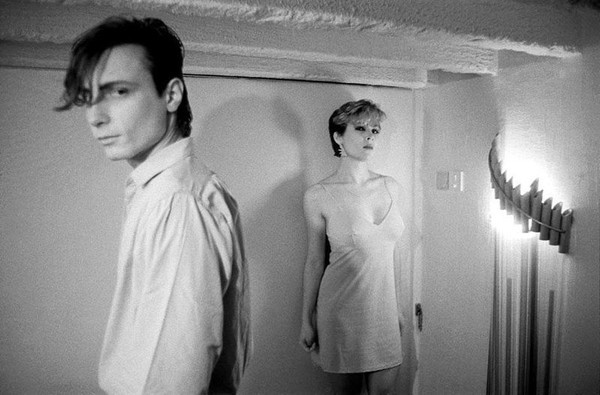
In Rijeka, punk embodied a rejection of inherited artistic rules and the commercial mainstream. Jazz, noise, new wave, industrial, synth-pop, hardcore, and folk elements were freely absorbed and reconfigured.
In 1979, the first Ri Rock Festival was held at the Youth Hall, featuring Termiti, Naša Stvar, Beta Centaury, Quarter, and Rađanje. The festival laid the foundations of what would become the Ri Rock scene and remains the longest-running rock festival in Croatia.
Equally important was Val, the magazine that became the mouthpiece of Rijeka’s alternative culture. By documenting, legitimising, and amplifying the scene, Val helped punk solidify into a sustained movement rather than a short-lived rupture.
“It’s a fact that Val was the first magazine in the former Yugoslavia to champion the punk scene in 1977,” recalled journalist Velid Đekić Jurković. “By writing about the subversive lyrics of bands in Rijeka, we were inspiring a change in youth consciousness.”
One of Val’s key voices was Goran Lisica Fox, later founder of Dallas Records. His rejection of mainstream Yugoslav rock — particularly the mass-consumption model represented by Bijelo Dugme — reflected a broader ideological divide between safe commercialism and politically engaged, structurally freer music.
Stylistically, Rijeka punk blended dark, gritty guitar work with gothic synths and noise, aligning more closely with post-punk and regional Novi Val than with traditional punk orthodoxy. Some bands adhered to a raw DIY ethic; others embraced minimalism, electronics, or abstraction. What united them was an insistence on experimentation and personal identity.
This hybrid sensibility laid the groundwork for Rijeka’s later alternative output. By the late 1980s and into the 1990s, bands such as Grad, Let 3, and Laufer reshaped the punk ethos into broader alternative rock forms. Let 3’s provocation traced directly back to Termiti’s irreverent chaos, while Grad’s heavy guitar work echoed the noise experiments of Grč and Mrtvi Kanal. Transmisia pushed further still, incorporating abrasive industrial aesthetics reminiscent of Ljubljana’s Laibach, Borghesia, and later industrial rock figures such as Trent Reznor’s Nine Inch Nails.
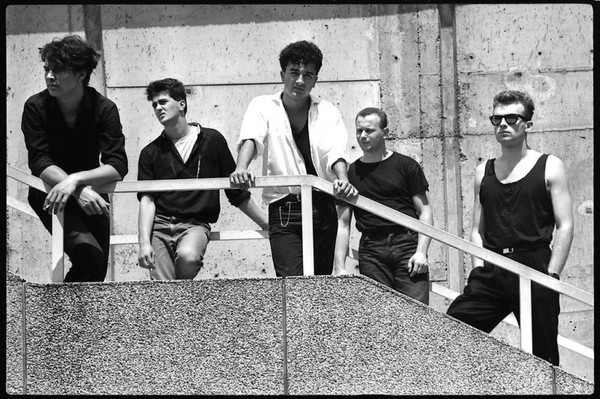
Rijeka’s punk scene always represented more than loud guitars, fast tempos, and chaotic live performances. It marked a cultural rupture — unprecedented in its local context — emphasising authenticity, independence, and confrontation. From Paraf’s illicit park performances to the preservation of punk graffiti as cultural heritage, Rijeka’s relationship with punk signals a deeper commitment to dissent, reinvention, and artistic freedom.
What remains is not nostalgia, but a living subculture — one that continues to challenge, provoke, and resist conformity to this day.
“Yugoslav rock was thus the moment of realisation that, in order to be genuine, authentic and — in the end — real, rock music had to be about something, and about something that matters.”
— Mišina
Sources:
Paraf punk graffiti. Total Croatia News. https://total-croatia-news.com/lifestyle/rijeka-has-protected-punk-graffiti-as-a-monument-of-importance/
Ri Rock festival. Lokal Patrioti. https://lokalpatrioti-rijeka.com/vijesti/ri-rock-festival-je-1979-udario-temelje-u-rijecki-punk-i-novi-val/
Mišina, Dalibor. Shake Rattle and Roll: Yugoslav Rock Music and the Poetics of Social Critique. https://www.amazon.com/Shake-Rattle-Roll-Yugoslav-Critique/dp/1409445658
Bousfield, Jonathan. Rock and Rijeka. https://www.new-east-archive.org/features/show/12893/val-magazine-yugoslavia-croatia-rijeka-punk-music-youth-culture