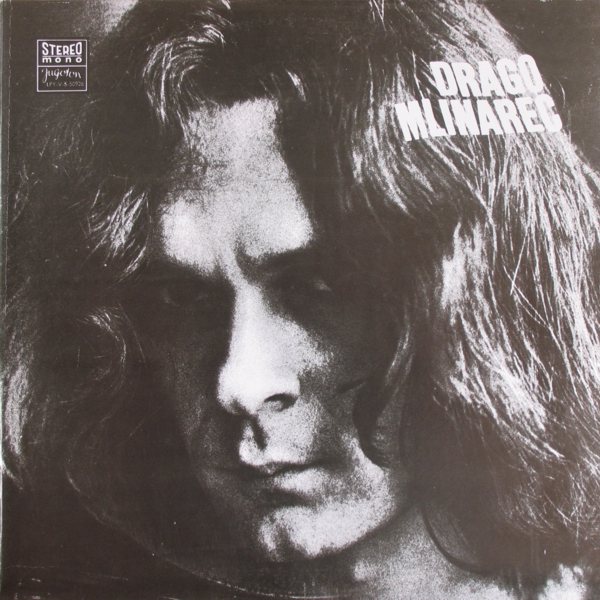
Drago Mlinarec began as the leader of Grupa 220 before going solo and releasing the historically significant A ti se ne daj, which can be considered the first progressive rock album released in Yugoslavia. The record is filled with talent and backed by Grupa 220.
I recently bought this record from Analogija in Split while on vacation. What immediately struck me is the moody and dramatic front cover, but what followed was a seamlessly tasteful blend of folk rock, prog, psych, pop rock, and blues that moved fluidly between psychedelic rock and melancholic balladry without ever feeling disjointed.
The album opens with Pop pjevač, a hard, blues-inflected rock cut infused with groovy piano from Branimir Živković, who frequently worked with Boško Petrović and Grupa 220, whilst also being a part of Time and working on their iconic debut. Živković also contributes a flute solo, adding some real Jethro Tull vibes to the mix. Next, Moje lađe settles into a similarly blues-rock groove before Srebrni se mraz follows with one of the record’s deep, melancholic high points, while Bar Dok Si Tu leans into harmonica-fuelled blues rock with a distinct Dylan-ish quality.
Izgleda, Ostat Ćeš Sam is another lovely rock ballad, and it’s here the album’s character comes fully into focus: the vocals throughout feel unmistakably of their era; while not technically perfect, they are authentic and soulful in a way that suits the material. The guitar work, especially on this track, is fantastic, and it’s the songwriting and arrangement work, alongside that playing, that really elevates the record. There’s real depth and feeling running through it, with a touch of Tomaž Pengov in its mood, though the closer comparison might be Pengov filtered through Indexi or Time, minus the symphonic drama of the latter and the more charismatic, full-bodied delivery of the former.
Grad shifts into something closer to Nick Drake in tone, with a hypnotic, entrancing strand of psychedelic folk that feels genuinely ahead of its time. The closer, Posmrtna osveta, carries the same melancholic, instrumental weight, closing the record on the same deep, gentle, psychedelic-folk-meets-prog register.
Taken as a whole, A ti se ne daj is a genuinely timeless record. It’s far from dull, moving across styles and genres with a real sense of direction, while still holding up to this day. The record is beautifully written and arranged throughout; an album that’s hard to beat within Yugoslav progressive rock and psychedelic folk, and one whose historical importance is refreshingly matched by the quality of the music itself.