Lufthansa
In Skopje, a new wave of artists has been emerging from the city’s underground. The movement feels very organic and somewhat reminiscent of the former Novi Val scene, with artists collaborating across sounds, styles, and ideas, unafraid to push things forward and explore new ground.
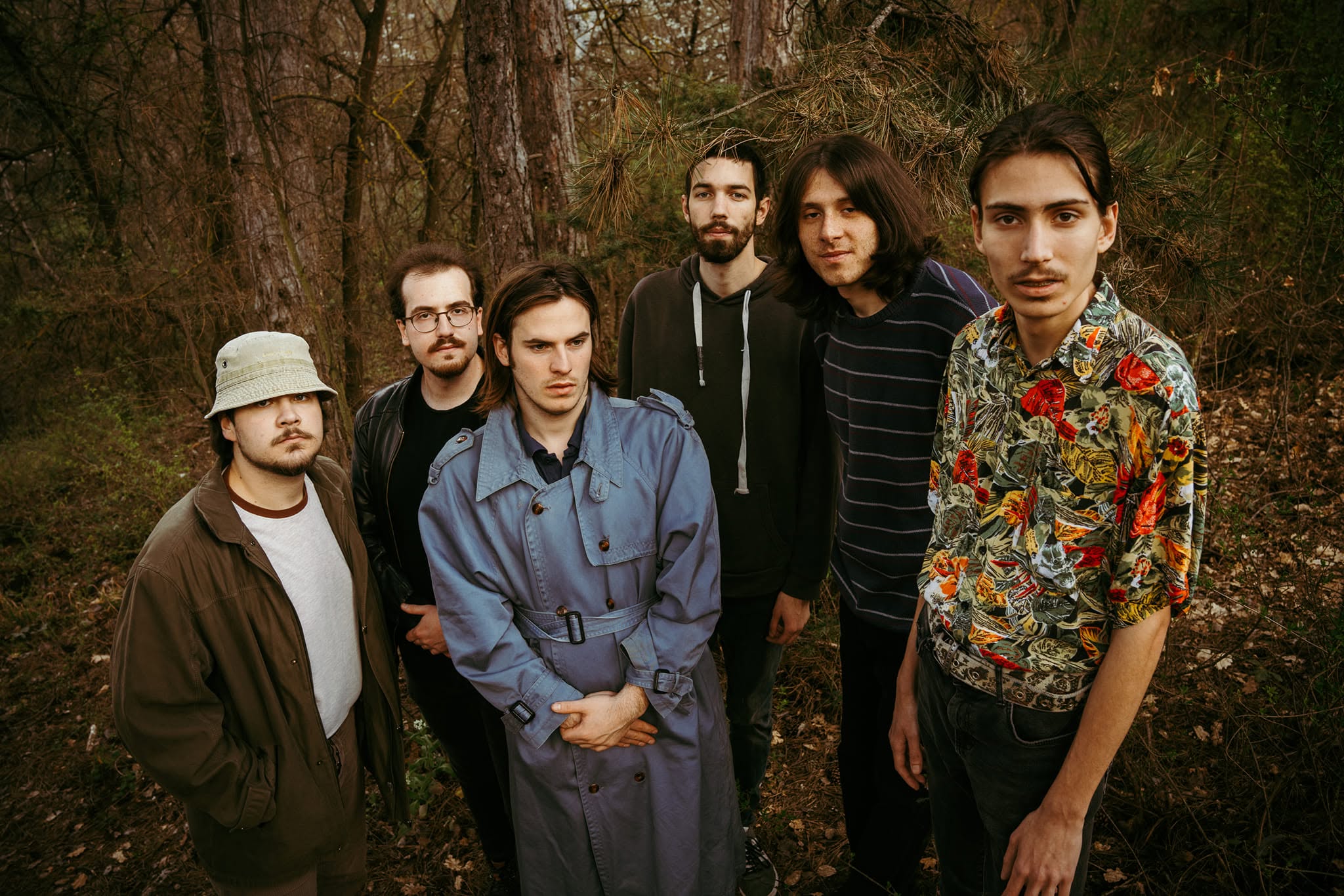
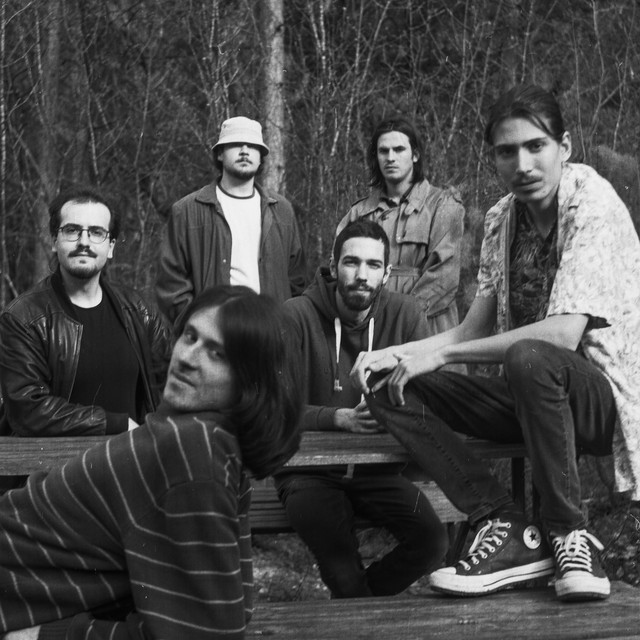
Lufthansa sit at the core with a sound that feels like a blueprint for much of what surrounds them. Their 2024 sophomore release moves between explosive post-punk urgency, slower alt-rock passages, and moments of dreamy progressive rock, all held together by tight musicianship and remarkably polished production.
Following on from our catch up with Golemata voda, it was also a pleasure catching up with the band whose 2024 release put the scene firmly on the map for me.
1. Let’s start with the title — Далеку од вистинското нешто (“Far from the Real Thing”). What does that phrase mean to you guys personally? And how does it relate to the mood or message of the album?
Many people have been feeling out of place in our country, and in the world in general as of late, an alienation which I feel always rises with the threat of fascism. It makes a person question how and how much things can really change, how far are we from a decent, humane life and surroundings? Maybe that’s the “real thing“, a place, physical and mental, where our country and the world in general ought to be, a place where people don’t destroy, belittle and corrupt each other. The message of the album I feel is to emphasise just how important it is to search for, and more importantly, work to build a world worthy of the “real thing“.
2. Could you tell us more about the album cover? I love it. It looks like an insect-like creature, a moth maybe? Is there a deeper meaning you wanted to convey?
I’m glad you love it! The idea for the insect, which is a moth as you guessed, was fully conceptualized and painted on canvas by Kamelija Kalamernikova, a great artist and a friend of ours. She actually did a whole moth exhibition in Skopje a while back, and if I remember correctly, her reasoning for using the moth as a centrepiece for the album cover was the nature of the moth, its never-tiring longing for light and transformation, themes present in her art but in our album as well.
3. You’ve described your sound as post-punk, but there are also touches of noise rock, post-rock and maybe jazz-rock in there too. How do you think about genre when writing — is it something conscious, or more instinctive?
It’s always instinctive, we would get into a riff, or an idea and work it through, it just has to be interesting to us, that’s the main thing, as all of us listen to a bunch of music, there being six of us in the band, so genre is never really on the mind. We make it if we like it.
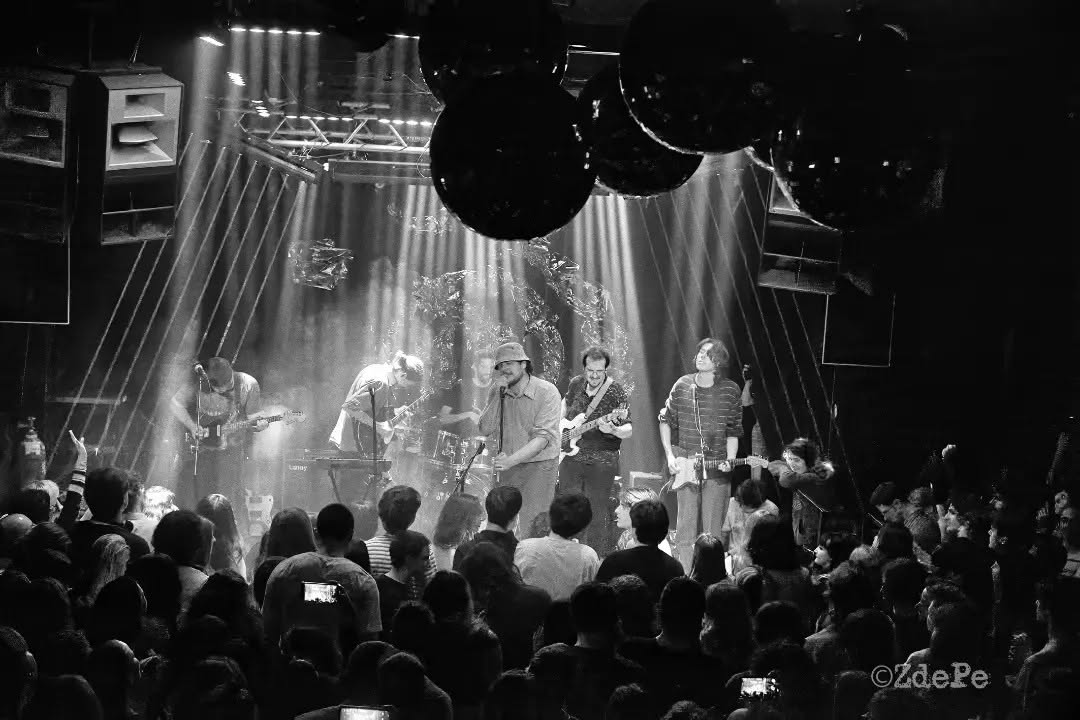
4. There’s a strong sense of lived experience throughout the record. How does being based in Skopje — and more broadly, living in today’s world — influence your sound, lyrics, or perspective as a band?
All of the horrible things that have happened in the world and in Macedonia, especially these days, certainly have had a lot of influence on us and on our music: our country’s constant agenda to push away and demean it’s young talent and prospects to the point of breaking (so they move away and never come back), the rise of fascism and the less and less present idea of constructive collectivisation, the constant fetishization of this sort of toxic, forced individuality based on commodity living, on hedonism, even a pathological absence of empathy, with the class divide being as large as ever, the absolute ignorance of art and of any mode of living not coinciding with the technological and military far right accelerationist scenario we’ve adopted, a life of constant capitalist, genocidal optimisation, all of these things have found their way into our music. However, wherever we travel we see amazing people fighting against these things, and as of late, even more so, the biggest influence on our sound and perspective is this hope we have felt, that there are good people everywhere, always fighting, that we are not alone and that we can make things better, through social involvement, through art, through unity and understanding, sharing our struggles and our knowledge, educating ourselves and trying to be constructive as much as we can.
5. What was the recording process like when you created this album? Any particular challenges or surprises along the way?
It was fun. We would get together for long days and record and record and record, experimenting, trying things out. We had the arrangement of the songs down before going into the recording process (which was done here and there, studios, basements, bedrooms), but a lot of the parts were made up then and there. Thankfully there weren’t really any hardships on the way. Slowly but surely we conceptualized, recorded and got it done.
6. As an Ex-YU music blog, we’re always curious about regional influences. Were there any artists — from the Balkans or beyond — that inspired your sound on this record?
There are a bunch. From beyond the Balkans our influences for the album (and in general) are what you’d expect, as far as rock goes (Pink Floyd, black midi, Animal Collective, Black Country, New Road, Talking Heads, The Beatles, Slint, Duster, Les Rallizes Dénudés, Can, This Heat, Sonic Youth, Swans, Pixies, Thee Oh Sees, King Gizz, QOTSA, Velvet Underground, Joy Division, GYBE, Title Fight…) but there’s a big hip-hop and trip-hop side (from Cult of the Damned to Capital STEEZ, Massive Attack, Boards of Canada) of the band too, along with a classical and jazz side (from Ravel to the Coltranes, Arthur Doyle, Mingus, Herbie) and a folk and country side (Blaze Foley, Townes Van Zandt, Jackson C. Frank, Nick Drake, Robbie Basho, Johnny Cash, Palace Music, MJ Lenderman) which show up a bit, but hopefully they’ll show up more in the future.
From the Balkans, these are some of our biggest influences and favourites: Arhangel, Bernays Propaganda, 21 Vek, TB Tracheri, The John, Goran Trajkovski, Nikola Badev, Rush to Relax, Darkwood Dub, Klotljudi, Presing, malpremal, Tomaž Pengov, Trobecove Krušne Peći.
7. What’s next for Lufthansa? You’ve been playing festivals and shows lately. Are there any plans to release more music, or expand further on the sound you explored here?
As of now, we don’t know. The band is resting and all of us are working on something new. It’s exciting! We’ll see where it goes.
Where to Find Them
Check out this guide to Skopje’s Emerging Underground if you’d like to dig into the scene further.