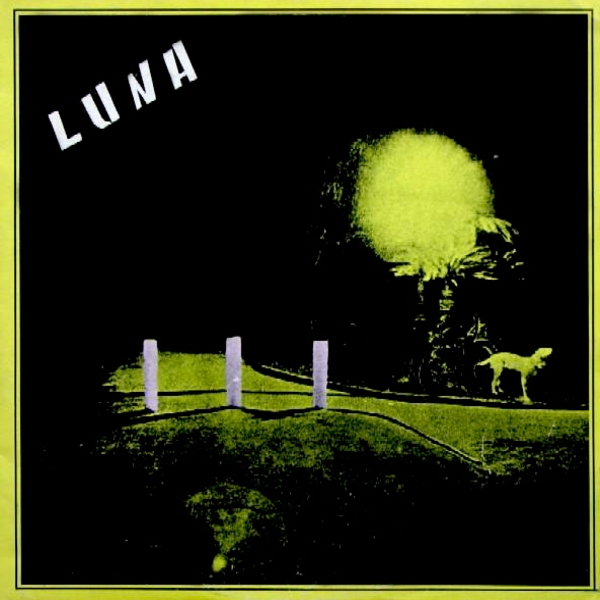
Luna emerged from Novi Sad’s new wave and post-punk underground in late 1981, forming out of the wreckage of new wave outfit La Strada after internal disputes, with the band name borrowed from Bernardo Bertolucci’s film La Luna. The lineup that made Nestvarne stvari was Zoran Bulatović “Bale” on guitar and composition, Slobodan Tišma on vocals and lyrics, Ivan Fece “Firchie” on drums, and Jasmina Mitrušić “Mina” on keyboards and vocals, who’d stepped in on bass after original member Marinko Vukmanović left to form Primavera.
What’s immediately noticeable on the opener Fakir is how close Luna sit to Joy Division. The vocals are deep, almost haunting, and the arrangement is unmistakably dark post-punk intertwined with gothic rock. Nestvarne stvari follows with a genuinely haunting guitar riff, some pleasingly awkward new wave angular bass lines and synths, and vocals every bit as dark, deep and melancholic as before.
The album was recorded at Aquarius Studio in Belgrade with producer Saša Habić, the band going in well-rehearsed with the arrangements already worked out. It was finished by September 1983, but internal conflict split the group before it ever came out — Tišma and Mitrušić left, and by the time Helidon released the record in spring 1984, there was no band left to promote it, which kept the pressing to just 920 copies. Didn’t stop it landing: Rock magazine named it the seventh-best album of 1984, and journalist Petar Luković called Luna “probably the most mature Novi Sad band,” with the record now widely regarded as one of the finest releases of the former Yugoslav rock scene.
I’ll admit I don’t actually own the original — what I picked up recently is the Luna / La Strada 1980-1983 reissue on Hokej Klub Virginitas, which collects rare early recordings including Nestvarne stvari itself and the third track, Ogledalo Lune — for my money, two of the best tracks here. Ogledalo Lune in particular builds a fantastic atmosphere, all choral chanting and cult-like vocal and guitar lines repeated throughout.
Okean changes things up with acoustic guitar and vocals from synth player Jasmina Mitrušić. It’s softer and more tender than the post-punk haunting that comes before it — melodic, beautiful, a welcome respite. Lambo then swings back into the band’s more gothic side, nocturnal synths and deep vocals to the fore.
The record as a whole is dark, urban and gothic — closer in spirit to Joy Division’s Closer than anything else in this vein. It’s a real masterpiece, and a darker, more gothic one than Tišma’s later self-titled record under a reformed La Strada, which leans more post-punk and comes out lighter in nature by comparison. La Strada dissolved again in 1989; Tišma went on to become a novelist, winning the NIN Award in 2012, while Bulatović ended up in New York and put out a remastered edition of Nestvarne stvari on his own label in 2000. The original lineup reunited just once, in 2004, to play the album in full at Novi Sad’s Exit Festival.