
In early November, we watched Ljubav – prema albumu Ekatarine Velike at Zagreb’s ZKM, a contemporary dance piece by choreographers Matea Bilosnić and Saša Božić that ties the album to today’s student protests and club culture. I’ve not been to many contemporary dance performances, so it felt slightly strange at first, even overwhelming, with the combination of lights, music and performers moving very close to you. But before long I was absorbed, and at times even laughing along. Looking back, I’m not sure if it was supposed to evoke that reaction, but I feel like it’s important to express your natural reaction to art rather than hold back and follow the crowd. Still, what surprised me most was the ending because it wasn’t Milan who got the final word but Magi, the subject of a closing poetic monologue. Although my Croatian couldn’t catch every line, knowing the band’s story, I got the gist, and wondered: why her?
For context, Magi was a classically trained pianist with perfect pitch. She turned down the Moscow Conservatory because her family didn’t want her to go at such a young age, instead going on to shape the sound of one of Yugoslavia’s greatest bands.
After S’ vetrom uz lice, their third album, released in 1986, EKV shifted further into post-punk territory, shedding some of their angular new wave spirit in favour of a darker, more alternative sound. The band committed to the change with a new drummer, Žika Todorović, formerly of art punk group Disciplina Kičme, a new producer in Theodore Yanni, and a move to the Belgrade-based label PGP RTB.
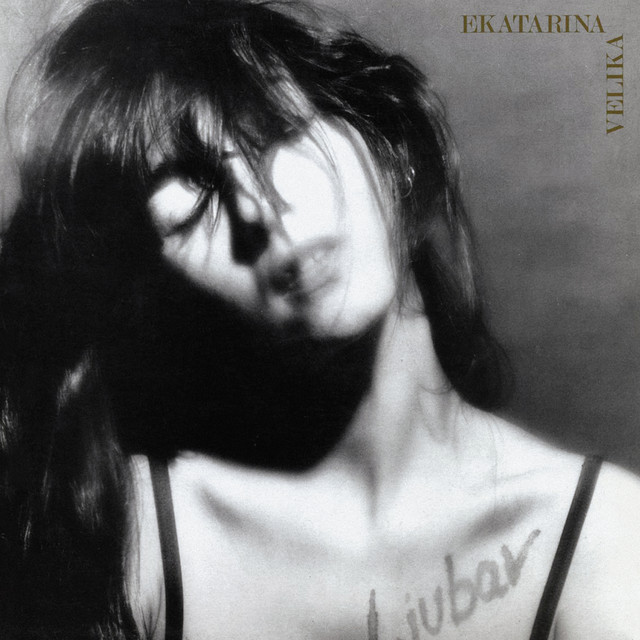
The cover is iconic, featuring Magi flinging her hair to the side, with the word ‘Ljubav’ across her chest. It’s also representative of her growing significance within the band. The more atmospheric nature of Ljubav allows Magi’s keys to take centre stage on tracks like 7 dana and the sombre Tonemo, while they still shimmer and interlink with Milan’s theatrics and the angular riffs on Zemlja and Pored mene.
Zemlja is one of their most recognisable tracks, if not the most, particularly with that jangly introduction and the mythic status it has reached after becoming an unofficial anthem of the recent student protests in Serbia. In truth, it could be the most iconic intro to any EX-YU album. Pored mene follows with a similar energy, as EKV go back-to-back with anthemic, stadium-ready tracks. Later on, Ljudi iz gradova is similar in that sense too, but with heavier keys that are almost funky. It feels slightly sinister to me, even mysterious, because of a dark undercurrent running through it. Perhaps it’s symbolic of the times: as the situation grew more tense each year, EKV became more political and more poetic.
The title track is a bit of a miss for me. The riff is basic and feels like a missed cut from their last, more new wave record, and the chorus is slightly awkward and doesn’t work. Sat between two absolute killer tracks, it’s disappointing, but what follows is my favourite EKV track, 7 dana, with lyrics written by Magi herself. The atmosphere is nocturnal, the keys are enchanting, the vocals are delicate and tense. It’s immediately obvious that the production is better than on previous records, and the sound is more mature: it’s a band with more patience and more experience. The crescendo is pure bliss.
Voda is slightly funky, slightly poppy, and another hint at the stadium-rock band they were becoming. It’s nothing special, but the crescendo is nice, with super catchy synths, before they dabble with wah-wah-drenched guitar. Prvi i poslednji dan brings in acoustic guitar, although it feels a bit too much like a filler track. Zid is similar, in that it feels a bit like a cheap pop track. It does grow on you, even if it feels like jangle pop that’s too stadium-rock and theatrical to really be jangle pop.
That brings me to a thought I’ve been trying to trace across the record. EKV’s biggest strength is probably Milan’s energy and his theatrics, but it’s a double-edged sword, because it can overstep the boundary into cheesy territory. It’s the one thing that holds Ljubav back from perfection: the title track leans a little too far that way, and Prvi i poslednji dan is the only real filler. Perhaps it just shows next to such strong tracks like Zemlja, Pored mene, 7 dana and Tonemo.
The last of nine tracks, Tonemo, closes out the album in dark, existential fashion. It’s cold, claustrophobic and eerie. Like 7 dana, there’s an underlying tension, a brooding anxiousness carried through Milan’s tender vocals, the tightly strung acoustic guitar and Magi’s crisp piano work.
Ljubav is a fantastic album, undoubtedly a classic with some outstanding tracks. At times it falls short, moving sideways on the title track and Prvi i poslednji dan, but it’s not long before the band is back on the move. And the moments that stay with me, 7 dana and Tonemo, are the ones where Milan’s theatrics step back and Magi leads the way — my answer to the question from that night at ZKM.
Magi’s later years were lost to addiction and poverty, one of too many tragedies in that scene, and she died in 2002, aged just 43. Much like Milan, who died in 1994 and became a symbol of unity across the region, Magi deserves to be remembered too: as the face of Ljubav, quite literally a symbol of love.