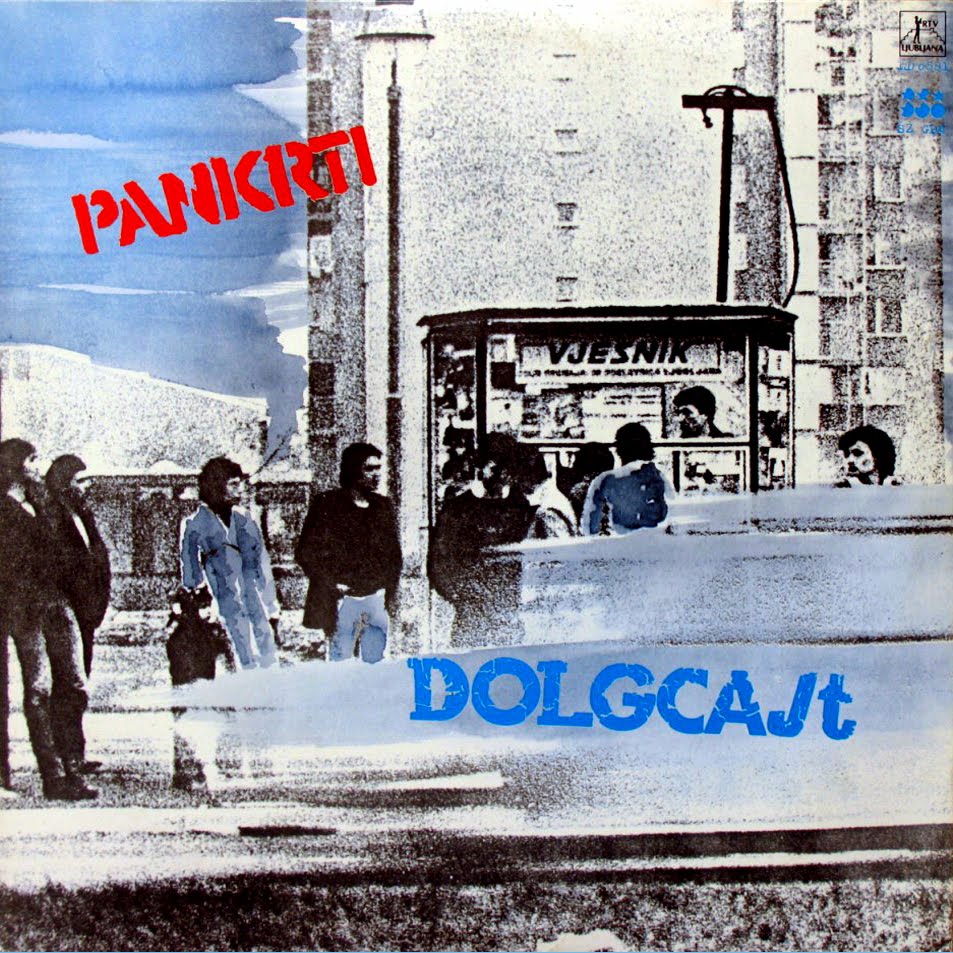
Dolgcajt (”Boredom”), released in 1980, was their debut album. The lyrics are delivered entirely in Slovenian — a conscious choice that likely limited the band’s reach across Yugoslavia, but also cemented their local identity. Rather than “selling out” into the more widely spoken Serbo-Croatian, Pankrti leaned into their own language for provocative lyrics and humour.
The record opens with Kruha in Iger, a fairly standard late-70s punk track that still feels quietly radical in the Yugoslav context. Musically, it’s closer to Ramones-style punk than hardcore — simple, direct, and repetitive — while the vocals recall something of Jello Biafra’s sneer, albeit without the same sharp musical backing. The title translates to Bread and Circuses, a Roman phrase describing superficial distractions used to pacify the public, and the satire lands clearly: Pankrti are mocking stagnation, complacency, and societal apathy.
Počitnice na morju follows with a catchier, slightly more energetic approach. It’s still restrained by punk standards, but there’s a sense of fun and immediacy here that works well. Civili in vojaki feels more generic by comparison, and the vocals in particular start to grate.
Metka leans further into rock ’n’ roll than punk. It’s slow, slightly sluggish, and carries some angst, though without the punch or focus needed to really leave an impact. It’s not unlike early Psihomodo Pop, just without the pop instincts or hooks that would later make that band memorable and popular on the radio.
Things pick up again with Lepi in prazni, one of the album’s more direct and effective political statements. Lines like “Ni več upanja, ni več ljudi, ni več poguma” (“No more hope, no more people, no more courage”) are driven home through repetition, underlining the band’s frustration with a generation they see as passive and hollow. The track captures the emptiness and boredom implied by the album’s title more convincingly than most.
Totalna revolucija is another notable track with a hint of irony and dark humour. Rather than glorifying radical change, the song points at the average “Janez” — the Slovenian everyman — who doesn’t want revolution at all, but comfort, television, and routine. It’s an anarchic jab at apathy, very much in the spirit of the Sex Pistols, though again filtered through local realities.
Taken as a whole, Dolgcajt is an important record, even if it isn’t a revolutionary one in a musical sense. The songs are simple, sometimes repetitive, and rarely adventurous by global punk standards. But the humour, satire, and political intent are essential here, and much of that is lost if you don’t understand Slovenian.
Rather than a fully realised artistic statement, Dolgcajt feels like a historic turning point. It documents the growing dissatisfaction of Yugoslav youth at the turn of the 1980s and helps set the stage for the Novi Val explosion that followed. Bands like Šarlo Akrobata, Električni Orgazam, and Idoli would soon refine these ideas into stronger, more adventurous records — but Pankrti were there first — bored, loud, and provocative.