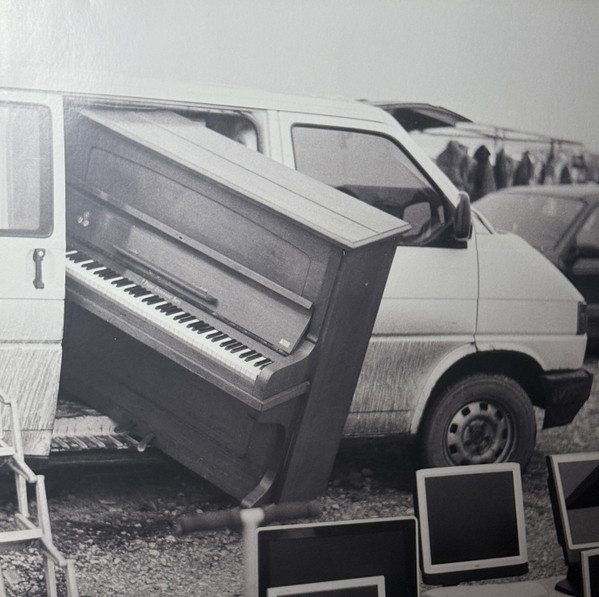

Dubioza kolektiv built their reputation on energetic genre crossovers and politically charged satire, blending ska, reggae, hip hop, punk, and Balkan folk into a festival-friendly sound designed for mass appeal. Their 2013 album Apsurdistan takes its name from a fictional country defined by social and political absurdity — a satirical mirror held up to post-socialist societies. The album artwork reinforces this idea through the image of an ostrich with its head buried in the sand, symbolising collective denial in the face of dysfunction.
Conceptually, this is fertile ground. In practice, however, Apsurdistan rarely moves beyond surface-level commentary. The album opens with Tranzicija, a glossy ska-reggae track driven by bright brass and simple hip hop vocals. Its triumphant tone feels more pop-oriented than subversive, leaning heavily on familiar Balkan signifiers without interrogating them in any meaningful way.
Prvi Maj continues in a similarly comedic register. While the band clearly aims for satire, the humour often lands awkwardly. The song’s exaggerated energy and stereotypical imagery risk flattening the very cultural nuances it seeks to critique. Catchy hooks are present, but they substitute for depth rather than enhancing it.
Kažu is one of the album’s catchier tracks, incorporating rapid-fire lyrics and infectious energy, but its satire operates mostly on a surface level. The song strings together humorous observations about social absurdities, media clichés, and everyday frustrations — from unemployment and brain drain to absurd claims and pop culture trivia — in a way that’s witty and entertaining but not deeply layered. Its strength lies in immediacy and comedic impact rather than narrative or conceptual complexity, illustrating a broader pattern on Apsurdistan: Dubioza kolektiv prioritises high-energy engagement and accessible satire over sustained thematic depth.
On Volio bih, the band leans into celebratory patriotism and youthful rebellion. The upbeat tempo and chant-like chorus generate undeniable energy, but the repetition of familiar motifs gives the track a corny edge that limits its emotional resonance.
Brijuni gestures toward more overt political critique through spoken-word passages over a world-music-inflected backdrop. While the intent is admirable, the execution feels restrained and musically conservative. Compared to artists who fuse social commentary with adventurous instrumentation, the arrangement here remains surprisingly static.
Across Apsurdistan, Dubioza kolektiv prioritise immediacy and accessibility over nuance. The album is undeniably catchy, engineered for live performance and communal sing-alongs. However, its satire often stops at broad gestures, and the genre fusion rarely ventures beyond polished pastiche. For listeners seeking layered storytelling or innovative musical exploration, the record may feel frustratingly shallow.
That said, Apsurdistan partially succeeds on its own terms as high-energy entertainment. Its tongue-in-cheek hooks can be memorable, its rhythms infectious, and its populist spirit seemingly resonates with a wide audience. The album’s limitations stem from a conscious embrace of simplicity and triumphant spirit, which diminishes potential longevity. It’s a choice that will divide listeners, but it depends on what you expect from a politically engaged band.
Where to Find Them
- Bandcamp: listen & support on Bandcamp