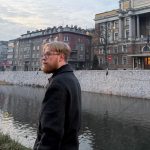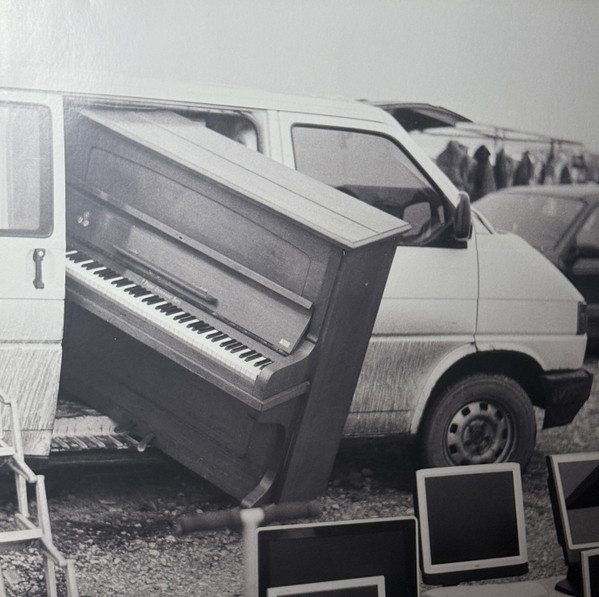

Eva Ras, by Angela Khoptyuk
In recent years, the EX-YU underground has seen a quiet resurgence of DIY screamo and hardcore projects — often operating in isolation, with little documentation or visibility outside the region.
Eva Ras, the solo project of Belgrade-based artist Filip Stojiljković, was a short-lived but deeply intentional project — one that moved between personal expression and a broader reflection of the social realities shaping the region.
In 2025, with the release of Moje Ime, Moj Dom i Moj Teret, Eva Ras came to a close — not as an abrupt ending, but as a deliberate final statement shaped by immediate observation, tension, and lived experience in Serbia.
In this interview, Filip reflects on the origins of the project, the making of its final record, and the current state of the EX-YU screamo scene.
1. Origin
Eva Ras has always felt very intense and uncompromising, even in its earliest recordings — what prompted you to start it back in 2016, and what kind of space were you in at the time?
Eva Ras started as one of several solo projects I was experimenting with around that time. The turning point came when I entered film school and began rediscovering Yugoslav cinema, especially the Black Wave movement. Watching Dušan Makavejev’s Love Affair (with Eva Ras) left a strong impression on me. At first, I didn’t fully understand why I chose that name. Over time, it became clearer. It reflected a search for cultural identity in a region that feels fragmented, burdened by political turmoil, disillusionment, and a kind of inherited instability. The project became a way to process that — not in a polished or symbolic way, but in a direct, almost confrontational form.
2. Final Record
Moje Ime, Moj Dom i Moj Teret turned out to be the final Eva Ras release. At what point did it start to feel like a closing statement, rather than just another record?
Moje Ime, Moj Dom i Moj Teret gradually revealed itself as a closing statement rather than just another release. The social and political climate in Serbia played a major role in that shift.
The record became a reflection of ongoing tensions — protests, public frustration, and a general sense that things are breaking down. The lyrics are very direct because they come from immediate observation. When something happens, you document it and express it as it is, without filtering it into something more “acceptable.” In that sense, the album feels like both documentation and release.

3. Sound & Intent
The record feels physically overwhelming at times — almost suffocating. Is that intensity something you consciously shaped as an experience for the listener, or does it come more from your influences — maybe certain records or artists that stayed with you?
It’s definitely a combination of both conscious intent and long-term influence. Screamo has always been a core part of my listening habits, and records like Chaos Is Me by Orchid or Seeing Means More Than Safety by Jeromes Dream left a lasting imprint on me. That intensity becomes internalized over time. When I started working on this record with a clearer sense of purpose, it naturally translated into something more suffocating and overwhelming. It wasn’t about making it “extreme” for its own sake, but about matching the emotional and psychological state behind it.
4. The Back Made to Break
The Back Made to Break stands out on the record — it feels slower, more atmospheric, and almost fragile compared to the surrounding chaos. How did that track come together, and did you see it as a kind of counterpoint to the rest of the album?
That track was heavily inspired by Sonya’s monologue from Chekhov’s Uncle Vanya. What struck me was the quiet collapse within it… A kind of exhausted acceptance rather than explosive resistance.
Musically, I wanted it to function as a moment of suspension within the record. It’s more restrained and fragile, but that contrast makes the surrounding chaos feel even more intense. It acts as a different kind of emotional weight, not an escape from it.
5. Philosophy & Themes
You reference figures like Žižek, Chekhov, and Tarkovsky — how do those influences actually enter the music? Do they shape the way you write, or more the way you think about what the project is doing?
The references to Žižek, Chekhov, and Tarkovsky are not just aesthetic — they shape how I think about the project as a whole. Žižek’s commentary, especially on Balkan identity and “geographical limits,” exposes the absurdity of ethnonationalism and inherited divisions. That perspective feeds directly into the themes of the album. The samples themselves act as anchors. They connect the music to a broader intellectual and cultural context, reinforcing the idea that these issues are not isolated, but part of a larger historical and philosophical framework.
6. Context / Environment
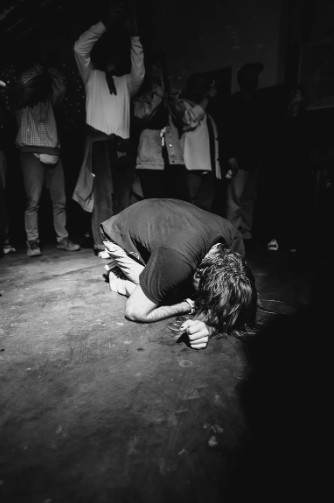
Belgrade has felt increasingly tense in recent years, both politically and socially — did that atmosphere seep into the project in any way, or was Eva Ras more of an inward space for you?
Initially, Eva Ras was very inward — a space to process personal frustration and emotions I didn’t have an outlet for. With this record, that shifted outward. The situation in Belgrade and Serbia more broadly became impossible to ignore. The tension, the protests, the sense of instability — it all seeped into the project. It stopped being purely introspective and became something more reactive to its surroundings.
7. Scene
For people outside the region, the EX-YU emo/screamo/hardcore scene can feel somewhat under the radar — from your perspective, what does it look like right now, both musically and in terms of community?
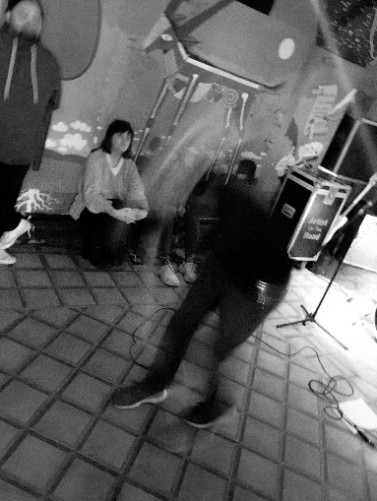
The EX-YU screamo and hardcore scene is still relatively small and fragmented compared to Western scenes, but it exists — and it’s more active than people might expect.
The main issue is visibility. Many bands operate in isolation, without proper documentation or exposure. That’s partly why I started my blog — to archive and connect these scattered efforts.
There’s a strong sense of authenticity in the scene, even if it lacks infrastructure. It’s driven by individuals rather than systems.
8. Legacy & Future
What led you to end Eva Ras when you did? Did it feel like something that had run its course, or something you had to step away from — and do you see yourself continuing in another form?
Ending Eva Ras felt like a necessary decision. The project had reached its natural conclusion with that record, both thematically and emotionally.
There was also a personal dissonance that I couldn’t ignore — seeing Eva Ras herself publicly dismiss and oppose the very protests that the album aligned with was deeply contradictory. It created a disconnect between the name and what the project had come to represent.
At that point, continuing under that name no longer made sense.
After that, my focus shifted towards my blog Dekonstrukcija Yugoviolence and my band Tužan Dečak Kavr Bend. While they differ in form, they still carry the same DIY approach and underlying intent.
Where to Find Them
- Bandcamp – https://evaras.bandcamp.com/
- Dekonstrukcija Yugoviolence
- Tužan Dečak Kavr Bend – https://tuzandecakkavrband.bandcamp.com/