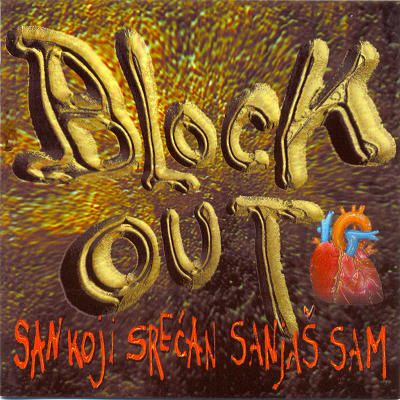
Released in 1998, just months before the region would once again collapse into violence, the third album by Block Out captures the paranoia, exhaustion and spiritual claustrophobia of late-90s Serbia with a level of artistic ambition that still feels unmatched within the EX-YU scene.
What makes the album so remarkable is how impossible it is to pin down stylistically. Across its seventy-plus minutes, Block Out move through psychedelic rock, sludge metal, grunge, progressive rock, art rock and dreamy alternative balladry without ever sounding disjointed. Most bands attempting this kind of genre collision end up fragmented or indulgent; here it feels completely natural, as if every stylistic turn is another stage deeper into the same nightmare.
The title track, San koji srećan sanjaš sam, opens deceptively warm. The guitars shimmer with almost sunlit, Latin-tinged textures, hazy and soft around the edges, drifting through a psychedelic atmosphere that feels strangely comforting. But gradually the song mutates into something uglier and denser — thick grunge riffs collapsing into sludge-laden chaos while Nikola Vranjković’s lyrics become increasingly dark and disorienting. The transition feels like watching reality rot in real time.
Then comes Najduži je poslednji sat, one of the album’s emotional centrepieces. Built around acoustic guitars and restrained arrangements, it trades heaviness for sorrow. Vranjković’s raspy voice sounds exhausted rather than aggressive, carrying a quiet pain that makes the song devastating without ever becoming melodramatic. The dreamy atmosphere hanging over the track gives it an almost dissociative quality.
But the album’s defining moment may still be Zvezdane staze. It’s one of those tracks that knocks you off your feet… The abrasive, metallic guitar tone crashes in immediately, faster and more aggressive than the slower stoner-leaning material surrounding it, while the deep, nasal vocals sound almost inhuman against the grinding sludge riffs. It’s ugly, pessimistic and overwhelming in the best possible way. Yet even here, Block Out avoid sounding one-dimensional; beneath the aggression there are traces of psychedelic rock and progressive experimentation constantly shifting underneath the surface. Few bands from the region have ever sounded this fearless stylistically.
That unpredictability is what keeps the album so absorbing despite its length. Raskorak slows everything down again with atmospheric guitars and melancholic alt-rock balladry, balancing fragility with bursts of heaviness, while Zorka might be the album’s most disturbing piece altogether. Slow, claustrophobic and deeply haunting, it drifts through dreamy passages before collapsing into crushing sludge metal that recalls bands like Electric Wizard. It’s suffocating music — grating, ugly and hypnotic all at once.
Blentostamin pushes the album even further into avant-garde territory. Opening with a strange brass interlude before exploding into chaotic punk-infused riffs, the track constantly feels on the verge of falling apart. The arrangements are unpredictable and almost microtonal at points, while Vranjković cycles through bizarre vocal performances that border on theatrical absurdity without breaking the album’s oppressive mood.
The softer material is equally essential to the album’s success. Protiv sebe provides one of the record’s most accessible moments — dreamy, melodic alternative rock with a memorable hook — hinting at Nikola’s later solo work.
What ultimately elevates San koji srećan sanjaš sam into masterpiece territory is the way it balances extremes. The heavier material is haunting without becoming too crushing, while the softer passages provide genuine emotional release rather than simply functioning as interludes. Both sides complement each other perfectly. The psychedelic haze, the sludge-metal abrasion, the melancholic alternative rock melodies and the progressive experimentation all feed into the same atmosphere of societal collapse and personal disintegration.
Even today, the album feels startlingly unique — not just within Serbian rock, but within alternative rock as a whole. There are plenty of great EX-YU records that capture disillusionment, melancholy or social frustration, but very few sound this psychologically fractured and artistically ambitious. It’s an album that doesn’t merely reflect its era; it practically predicts catastrophe.
Few records from the region feel this uncompromising, this strange or this emotionally suffocating. And even fewer manage to turn that suffocation into something genuinely beautiful.