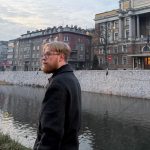

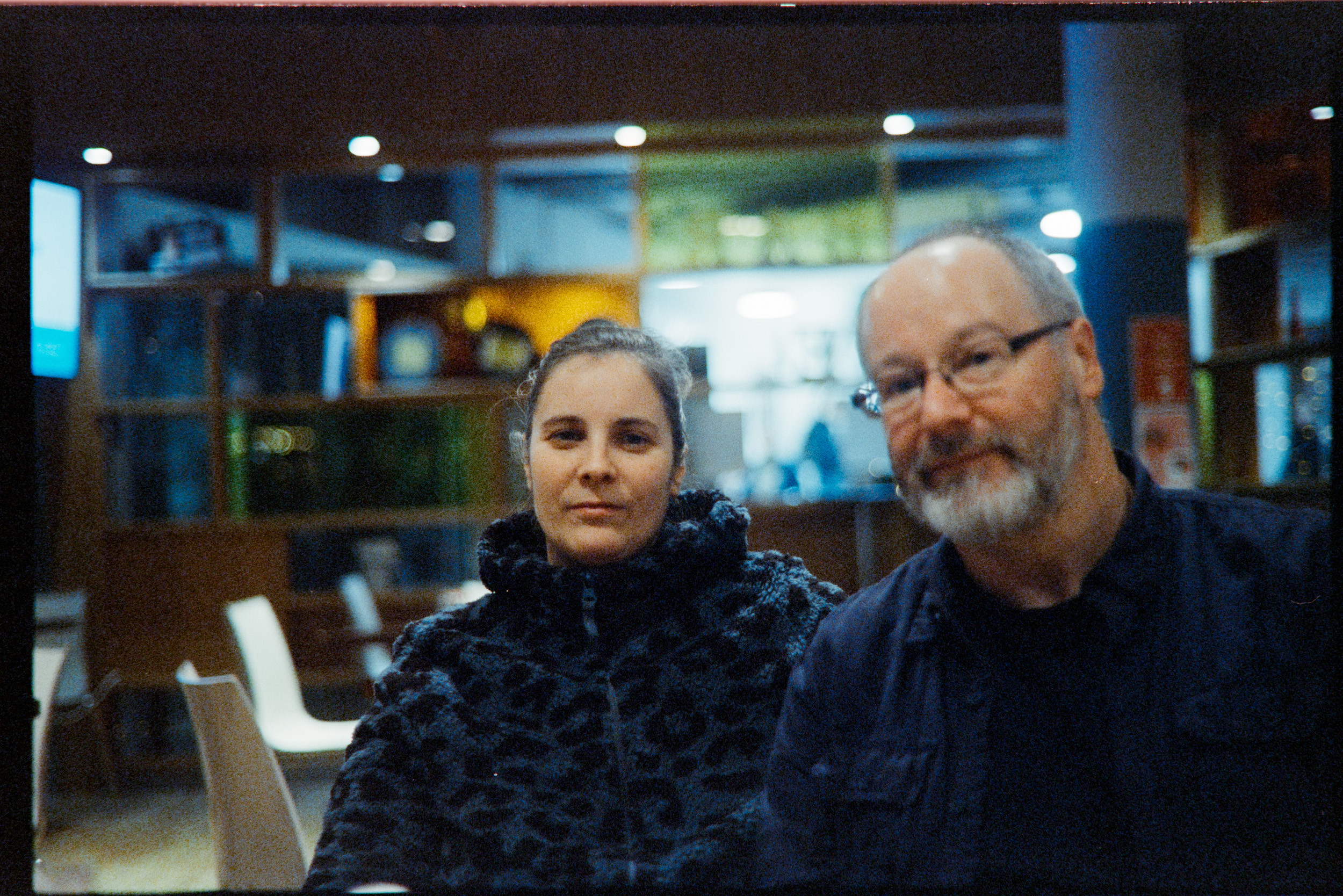
Manja Ristić, by Nina Pernat
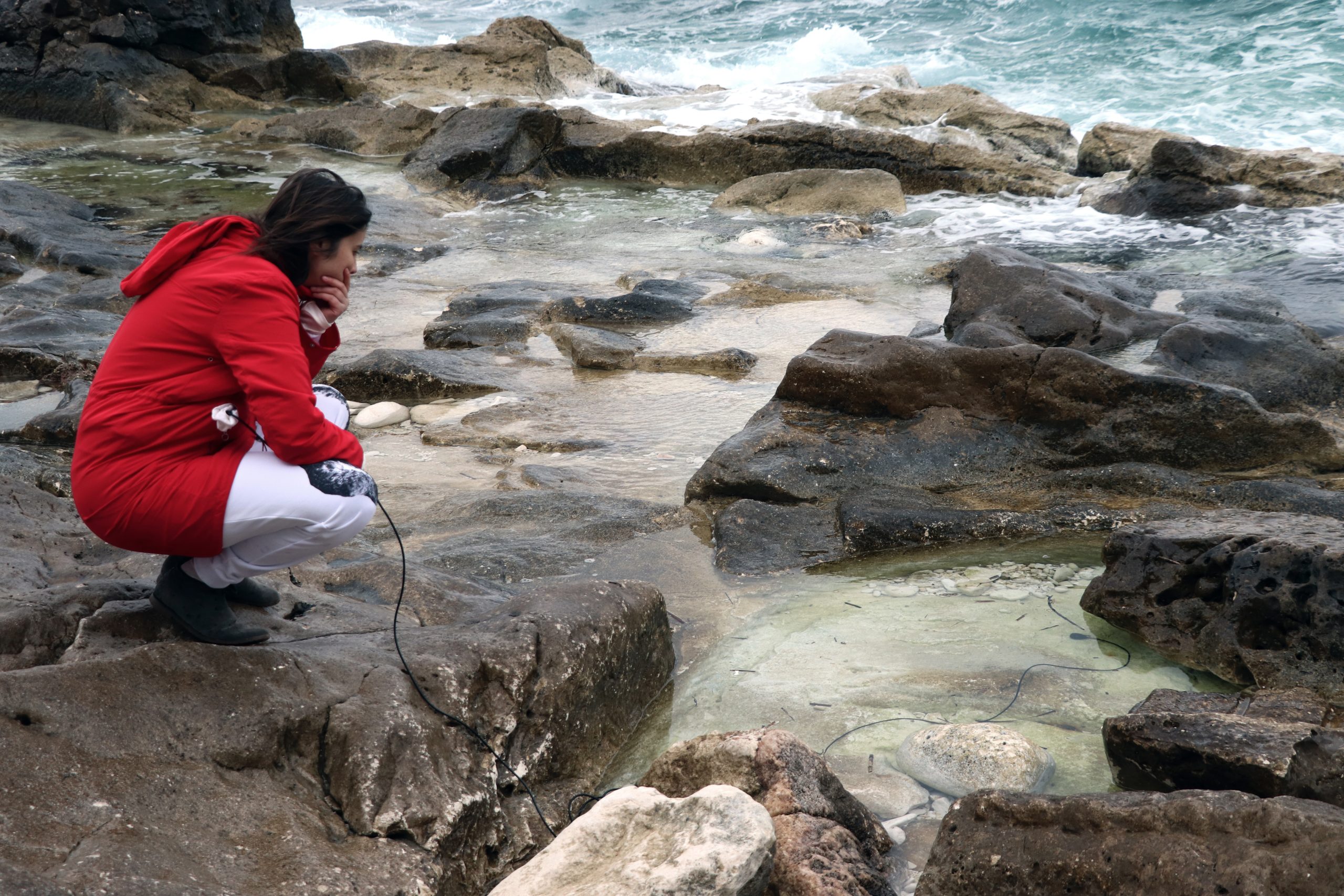
I discovered Manja Ristić through her 2025 release, Sargassum aeterna, a four-part sonata described as a meditation on a dying world, built from hydrophone recordings in environmentally vulnerable marine areas and custom-built terraphons deployed in extreme locations. It’s not easy listening, but its carefully constructed soundscapes open a delicate window into a dystopian future defined by ecological collapse and social catastrophe. A message that feels particularly urgent right now, as wildfires tear through France and Spain, forcing over 250,000 people from their homes in what France has called the largest evacuation since the Second World War.
Ristić is a Belgrade-born violinist, sound artist, published poet, curator, and researcher, currently based on the island of Korčula, Croatia. Her work spans field recording, experimental radio arts and sound installation, released on labels including LINE, Kamizdat, Unfathomless and Erstwhile.
What drew me to interview her specifically was not only the meticulous craft of her releases, but the deep thought she places on their meaning and context. Records like Volim Beograd — built from flea market tapes processed on the EMS Synthi 100 at the Electronic Studio of Radio Belgrade — and Il Presidente, a reckoning with family memory, her father’s water polo career, and the Yugoslav golden era and its collapse, felt like the right entry points for a site that spends most of its time in the archive of that world. As did the Sounding Spomeniks project, which takes her inside Yugoslav antifascist monuments to perform.
1. Listening to Sargassum aeterna I kept thinking about Hiroshi Yoshimura, particularly Surround. He had this idea that music should blend into the listening environment so that city noise from outside the window becomes part of the piece. Your work feels similar in that way, the listening context seems to change everything. But where Yoshimura was writing music for newly built homes, yours carries something darker, a sense of ecological anxiety and something already lost. Do you think about how and where people listen? Does the environment somehow change what the music means to them?
In this particular work, the answer is no; it is not purposely open to “other” environments
because it is conceptually rooted. As you may have noticed, the sound has an extension in
the text submitted together with the vinyl, and there is a deeper meaning behind the practice
employed in the making of this work, as complex as speculative listening and as complex as
listening into a distant future. There are culturological, anthropological, and historical
references, extended recording techniques such as custom-built terraphons employed in
extreme locations, hydrophones recording in protected and environmentally vulnerable
areas, so there are truly a lot of aspects in this multilayered four-piece sonata for the dying
world. It is conceptually, but also energetically articulated, and it probably “works” the best in
a controlled environment. A few other pieces can be interpreted situationally and could
communicate better with a variety of soundscapes, but unfortunately this is not one of those.
Yoshimura’s concept is a natural extension of active listening in which we combine both
ambience and narrative modalities of the soundscape; gradually employing passive and
active cognitive sound processing and stretching attention further until more and more neural
networks participate. Slowly synchronising the environment with what we hear. It is
predominantly a brain trait, evolutionarily made for easier signal processing, but it is also an
interpretation as such, so there are not two identical ways of hearing, or sensing, the same
environment. The way we hear one place the “same” way is solely a social agreement. The
moment you start digging deeper into it, it shows vast diversity.
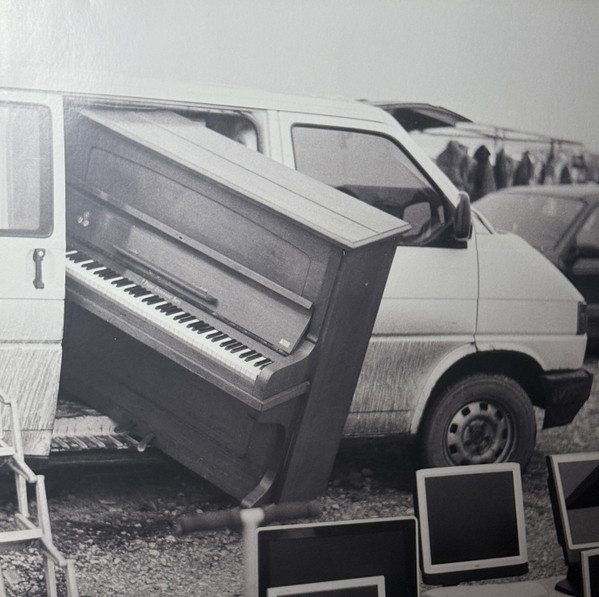
2. Volim Beograd is built from tapes found at Belgrade flea markets and processed on
the EMS Synthi 100 at the Electronic Studio of Radio Belgrade. What drew you to
that material, and what do those found recordings carry that a conventional recording
couldn’t?
Not an easy question to answer briefly; the overall concept has social and political depth, but
also leans on the three-decade-long practice of Mark Vernon, who has been collecting
forgotten and discarded voices across the globe and turning them into remarkable sound art.
If I tell you here, briefly, what drew us to the material we found, it will be a huge spoiler.
Everyone reading this, please read the accompanying booklet for this album; it is essential. It
is a fascinating story, wonderfully designed, and easy to absorb. The entire release is free to
download on my Bandcamp as well as Kamizdat’s.
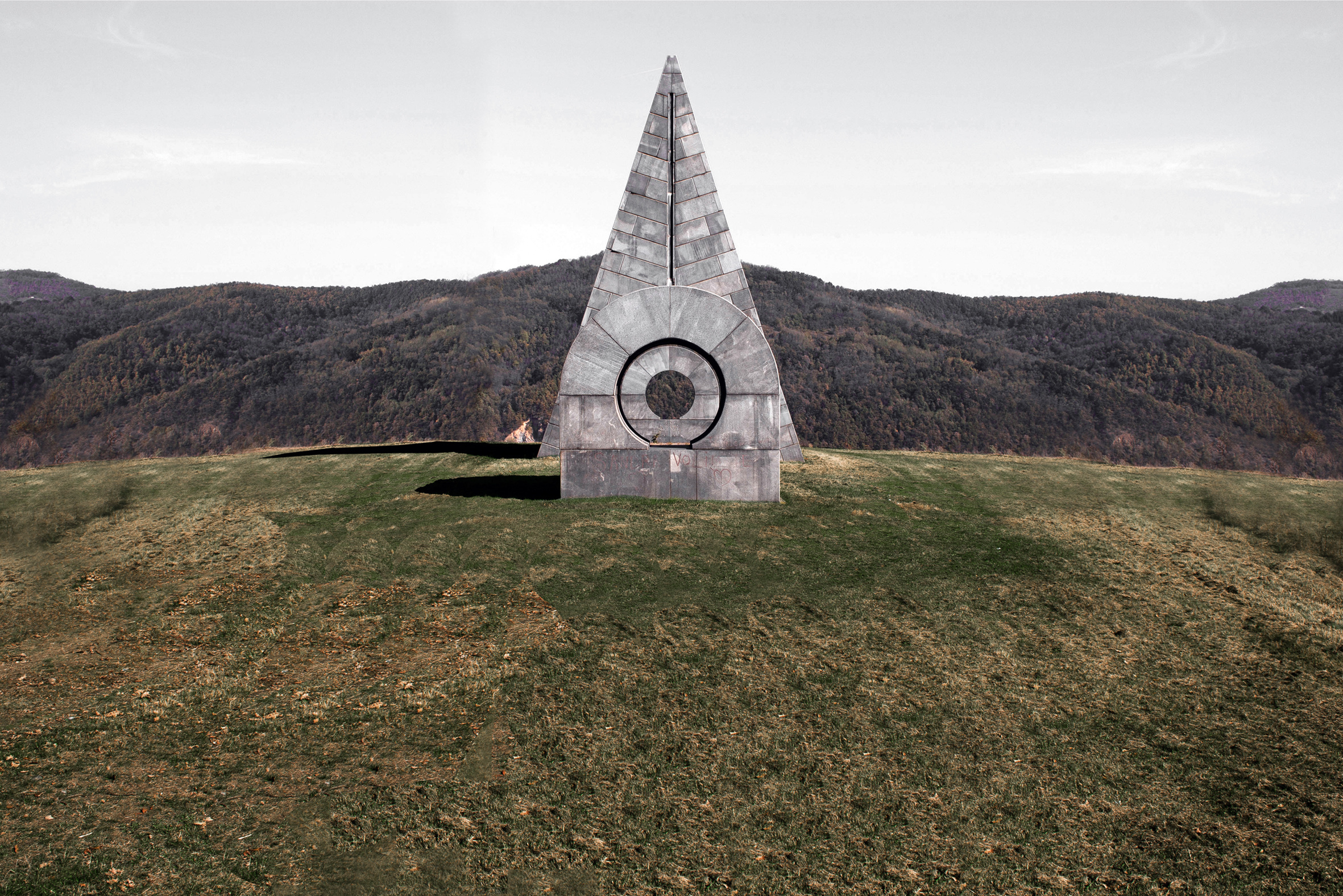
3. The Sounding Spomeniks project took you to Popina, Bogdan Bogdanović’s
monument above Štulac. You describe playing inside the central circular chamber as
something permanently inscribed in your body. What does it mean to activate a
Yugoslav antifascist monument through sound, particularly now when the memory of
that period feels so contested?
It sort of proves that remembrance of the antifascist movement and the sacrifices it took is
not contested, but it also alludes to a better understanding of the genius of Bogdan
Bogdanović, whose legacy grows with time. The essence of his vision was that memory
should be felt, not merely known. Popina reveals that memory is a willingness to stand at the
threshold between times, a place where the past bleeds into the present and where the
future depends on our capacity to remember with care and complexity, to be open to
absorbing its demands for healing and transformation. The Popina monument stands as a
sculptural meditation on one of the earliest and most symbolically charged confrontations of
the Second World War. On 13 October 1941, vastly outnumbered Partisan units, together
with what remained of the King’s National Guard from the Vrnjačka Trstenički and
Kraljevački detachments, engaged a five-times-stronger advancing 717th German Infantry
Division in what is often described as the first full frontal clash between resistance forces and
the Wehrmacht. The battle was fierce, brief, and costly. In the following days, the Germans
killed thousands of civilians in nearby Kraljevo, marking the beginning of the
counteroffensive against the first liberated territory within the Reich’s borders. It is good to
know where liberation started and what the weight of its struggle was!
Bogdanović shaped a landscape of stone sentinels carved from dark gabbro, arranged in
alignments that open and close like apertures. They resist literal interpretation because he
believed monuments should provoke reflection rather than dictate meaning, offering a space
where memory can be approached, not consumed. His monuments often function as
instruments of perception, and Popina is no exception. The visitor becomes part of the
composition. The central chamber, an acoustically remarkable circular space, acts as a
resonator. Its geometry gathers sound and folds it back into the body. The stone absorbs
heat, light, and vibration, creating a sensory density inseparable from the monument’s
architectural logic. Brutalist Yugoslav monuments are political statements built during late
socialism; they reflect a moment when the state sought to articulate a collective antifascist
identity through art. Yet Bogdanović infused his work with ambiguity. His monuments resist
propaganda. They refuse to monumentalize war. Instead, they monumentalize the fragility of
human struggle, the cost of resistance, and the ethical imperative to remember. I hope this
helps in understanding the meaning of our performative action.
4. Il Presidente is deeply personal. Your father’s water polo career, your mother,
Korčula, the Yugoslav golden era and then its collapse. How did working with family
memory feel different from your usual practice?
It was dreadful, even though a lot of my work includes intimacy, vulnerability, and radical
honesty. Working with my own family memory gives it a special weight. Knowing and feeling
the dynamics is one thing; presenting them in any art form almost feels dangerous. But I
knew it needed to be done, and I did it gracefully, although it caused sleepless nights.
Working with family voices embodies them forever, and I think it is a valuable way of being
with one another through time. My mother died twenty years ago, and one of my big regrets
is not having a single recording of her voice. Not that I didn’t want to record her; I simply
wasn’t into recording back then enough to have the opportunity. Voice carries a person’s
energy so precisely; you can tell a lot about their emotional, mental, even physical traits and
conditions. And on top of that, you can hear their soul bursting through. With such depth of
listening and understanding of embodiment through sound, I naturally felt too exposed.
Luckily, I live far away from all the cultural noise of the world, so I can allow myself things
like this.
5. You’ve mentioned Jasmina Mina Mitrušić from Luna as a formative influence. Luna
feels like quite a specific touchstone, that melancholic Novi Sad new wave world. Do
you feel connected to that lineage in your own work, even though you’ve gone
somewhere very different sonically?
Mina has been a close friend since the late nineties and is probably one of my earliest
creative influences. It is her genius and extraordinary artistic abilities that drew me closer to
learn from her through our friendship and joint creative adventures, nothing to do with the
new wave stuff at all. Mina is one of the most underrated Serbian composers, academically
and in the contemporary scene, with a remarkable legacy in composing for various
instruments, ensembles, formations, even opera. She is also an outstanding improviser, a
painter, a glass artist, and a poet. Luna was just her youth phase; what came after is her true
artistic weight.
6. Your recordings come from very specific places: Korčula, Belgrade, and Mljet, but the concerns expressed feel much bigger than any one location. When someone who
has never been to any of those places listens, do you think they hear the same
thing? Can sound carry the weight of a place on its own, or does something always
get lost in transmission?
My recordings come from all around Europe and North America; I didn’t have opportunities
to record Asia, Africa, or South America, but let’s hope the best is yet to come. There is no
such thing as experiencing and hearing a place the same way; it is completely individual
sensorial interpretation, largely conditioned by our diversity in neural development. Sound
carries the weight of a place absolutely, but that has little to do with how we interpret it.
7. What are you working on now that you’re most excited about?
A lot of collaborations, writings about Mnemosonic Topographies, a new album dedicated to
my mother coming next year, workshops, research, residencies, field trips. It goes on and
on, in a dynamic I can handle considering that I am a full-time carer of an autistic child. So,
there is balance, and there is chaos, but it is mostly still enjoyable.
Where to Find Manja
Works Mentioned in the interview
- Sargassum aeterna (2025)
- Volim Beograd (2026)
- Sounding Spomeniks project (2026)
- Il Presidente (2026)