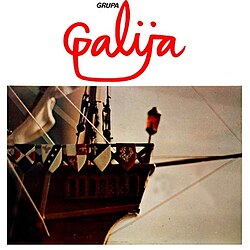
Released in 1979, Prva plovidba captures Galija at the very beginning of their journey — before the band moved toward the more polished mainstream rock sound that would later define much of their commercial success. At this stage, the group sat somewhere between bluesy hard rock and progressive rock ambition, drawing heavily from Western influences such as Led Zeppelin, Pink Floyd, Genesis, The Rolling Stones, and Eagles. The result is an album with occasional sparks of personality and atmosphere, but one that ultimately struggles to fully develop its ideas.
Much of the record leans toward warm, boogie-driven blues rock. Opening track Avanturista is easily one of the album’s strongest moments, built around upbeat riffs, soulful guitar work, and driving hard rock drumming. There’s a clear Led Zeppelin influence throughout, but the track carries an easygoing charm of its own — the kind of music that feels designed for a late summer afternoon with a beer in hand. It’s warm, melodic, and immediately accessible.
Unfortunately, the album rarely maintains that momentum. Letnja pesma quickly falls into far safer territory, drifting into fairly generic pop-rock songwriting without much identity or emotional weight. It’s pleasant enough, but ultimately forgettable, lacking the energy or distinctiveness needed to leave a lasting impression.
Pesma za dobro jutro returns to the album’s blues-rock core, this time introducing harmonica into the mix. The upbeat atmosphere works well again, and the song feels more lively than the preceding track, but many of the album’s recurring problems become harder to ignore here. The vocal performances often feel awkward and strained, while the production quality remains thin and inconsistent throughout the record.
That unevenness continues on Posrednik, where Galija attempt to push further into progressive rock territory through synth textures and more technical arrangements. While the ambition is appreciated, the execution feels somewhat directionless. The track introduces more complexity, but never develops enough atmosphere or structure to become particularly memorable.
One of the album’s other highlights arrives with Gospi, a more cosmic, prog-leaning ballad that briefly reveals the potential hidden within the band’s sound. The keyboards create a lush atmosphere that feels far more compelling than much of the straightforward boogie rock elsewhere on the record. There’s a sense of scale and mood here that the album would have benefited from exploring more consistently.
The closing track Decimen expands that progressive ambition even further. At over nine minutes long, it attempts to deliver a more sprawling, technical composition filled with solos and shifting passages. At times, it succeeds — particularly during the stronger guitar sections midway through — but the song ultimately meanders without a strong sense of direction. Ideas appear and disappear without fully developing, and the unusual choral ending feels more confusing than rewarding. Like much of the album, it hints at greater possibilities without ever fully realising them.
That tension between ambition and execution defines Prva plovidba as a whole. Galija clearly possessed strong influences and musical aspirations, but the songwriting often feels underdeveloped, while the production and vocals weaken many of the stronger instrumental moments. The occasional flashes of quality — particularly on Avanturista and Gospi — suggest a band still searching for its identity rather than fully in control of it.
In retrospect, the album feels more historically interesting than artistically essential. There’s an undeniable nostalgic attachment surrounding Galija, particularly among older listeners who experienced the band in their original context, but revisiting Prva plovidba today reveals a record that feels inconsistent and frequently dull beside the stronger progressive and hard rock releases emerging from Yugoslavia at the same time.
While not without charm, it remains a fairly mediocre debut — a record with moments of promise, but one ultimately overshadowed by both its influences and its contemporaries.