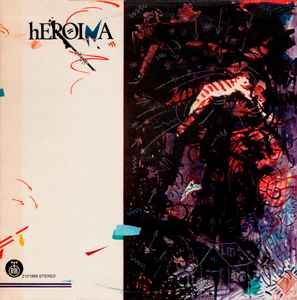
Heroina’s self-titled 1985 debut has become something of a cult classic in Novi Sad circles, and not just for the music — it was pressed only once, and with barely 40 people marking it as owned on Discogs today, copies now fetch upwards of €100.
Part of the wider Novi Sad post-punk scene, the band itself doesn’t seem to have left much of a trail beyond this record; some members went on to play with fellow Novi Sad groups Oktobar 1864 and Laboratorija Zvuka, but there’s little else connecting them outward. What they left behind, though, is a genuinely excellent record. Funky new wave with real Talking Heads energy, full of angular bass lines and awkward, funny, anxious vocals that are theatrical and groovy.
Mo Mo opens things with the clearest Talking Heads nod on the album — angular, driving bass, a brass section filling out the chorus, and delightfully odd English-language vocals about someone raiding the kitchen (“he’s eaten all the strawberries, he’s eaten all the meat”), delivered with that anxious, slightly panicked new wave energy David Byrne made his own. Legenda follows in a similarly upbeat, funky tone — a clap machine drives the track nicely, and a saxophone gives it real artistic depth. Where new wave can often feel flat and repetitive, Heroina’s tracks are consistently layered, which explains why several run longer than you’d expect from the genre.
Ljubav je zagonetka shifts into something closer to synthpop or art rock, opening on a lovely piano line before a driving bass drum takes over. It’s more conventionally new wave in spirit, and probably the album’s low point — less funky, less inspired than the opener — but it’s uphill from here. Vidim tvoj san moves into darker, more atmospheric territory, heavy on synths, with higher-pitched vocal contributions from (I believe) Duška Karanov. It brought to mind Boa’s nocturnal synthpop/art rock atmosphere, carrying that same late-night new wave anxiety and sense of isolation. Sećanja, later on, works similar territory but leans poppier — catchier, more accessible, dreamy and atmospheric with its synth work.
Noć and Zaigrajmo continue in a darker, atmospheric register, though the angular basslines and anxious vocals take a step back here in favour of more melodic singing and a stronger focus on atmosphere — Zaigrajmo in particular has a genuinely catchy chorus. The tracks run long, giving the dark atmosphere real room to build and fill the space. It’s hard to properly judge the production, since I’m working from a YouTube vinyl rip, but the arrangements throughout are clearly considered and well put together — no surprise, given Suba produced the record and also contributed piano, synths, and drum programming, all features that come through clearly and purposefully across the album.
The closing, self-titled Heroina is a real highlight. I’m not sure why, but there’s something about a self-titled track on a self-titled album that always intrigues me (a bit of a Black Sabbath move, in that sense), and it’s strange that it opens side B rather than side A, since it plays almost like the embodiment of the band itself: angular basslines, intense bass drum programming, guitar solos, dark atmospheric synths, and melodic, theatrical vocals all coming together at once.
A fantastic hidden gem from the Novi Sad scene, it’s a shame it’s never been repressed on CD or vinyl, though hopefully that changes eventually. The bass playing throughout is fantastic, and the tracks are consistently deeply layered, with brass, synth and guitar solos, and a wide range of vocal styles giving the record real depth. A remarkable first effort, even if it doesn’t seem to have left much of a mark on the wider scene beyond this one record. Recommended for fans of Talking Heads and Depeche Mode.