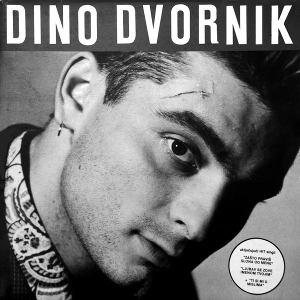
A package arrived recently from Latvia with three records inside. I’d ordered them from a Discogs store I’d stumbled upon after falling down a YouTube rabbit hole one evening — Yugoslav funk, folk and disco pressed on Soviet wax, sitting on a dusty shelf in Riga for who knows how long.
On first listen, they were scratched, dusty and full of dirt. It took me ten minutes to comb over them with a toothpick and dislodge the dirt trapped in the grooves. But after that, they played well for records over 50 years old, and for me, this is the joy of record collecting, or crate digging: discovering lost artifacts from history, fixing them up, and trying to get as close as possible to that first listening experience from decades ago.
Weirdly enough, it felt like I was recovering something — bringing them back home. But as it turns out, the records may never have left Latvia at all. The Riga factory was one of Melodiya’s main pressing plants. These weren’t imports that had travelled east; they were made there.
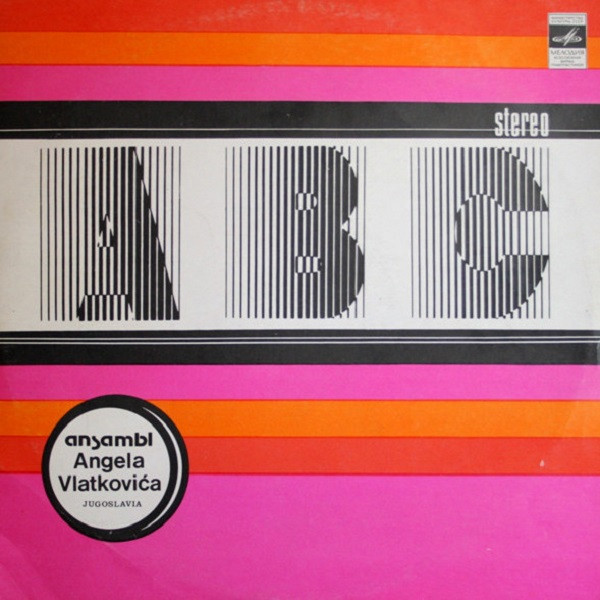
The oldest of the three is the 1971 ABC record — Ansambl Angela Vlatkovića — pressed on Melodiya, the Soviet state label that controlled virtually all music distribution across the USSR. A Yugoslav band on a Soviet label — how strange, right? The combination shouldn’t quite exist, and yet ABC managed to release at least five records in the USSR between 1971 and 1981 — singles, full-lengths, and accompanying orchestra recordings — with multiple sleeve variations across different Soviet pressing plants, pointing to a sustained, decade-long relationship between a Belgrade ensemble and the Soviet music apparatus.
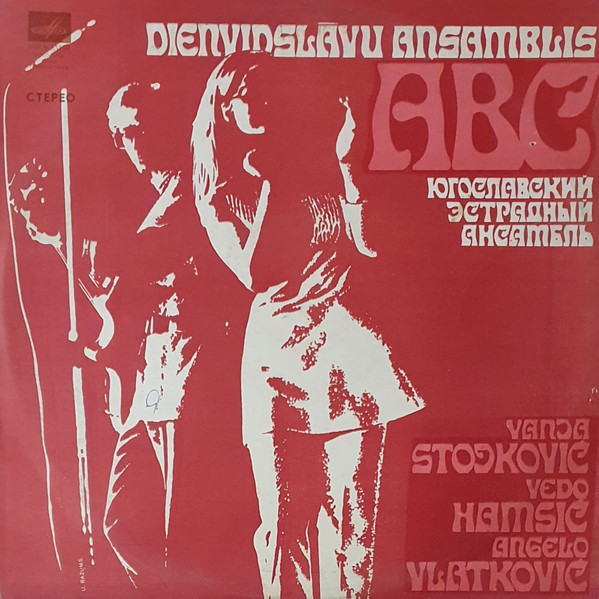
The tracklist reads like a UN variety programme: a Serbian folk song arranged by legendary composer Kornelije Kovač, Hey Jude, Proud Mary, a Cuban folk melody, a Latvian song by composer Raimonds Pauls, a Romani standard, Italian pop, French chanson, and original compositions. Corny Western covers sitting next to Balkan folk, Lennon-McCartney next to a song presumably aimed at the Riga market. At first glance, it looks scattered — but when you appreciate that this is a band assembling itself specifically for Soviet cultural gatekeepers, demonstrating breadth, internationalism, and ideological range, it clicks. You don’t get five releases on Melodiya by accident.
The highlight — and the track that reframes everything — is Jelem Jelem. A soulful reincarnation of the traditional Romani folk song, driven by melancholic vocals intertwined with funky keys. It’s an instant standout, and what makes it even more remarkable is the timing. Jelem Jelem is a traditional Romani folk song that had just been formally adopted as the anthem of the first World Romani Congress, held in London in April 1971 — the same year this record was pressed. Four years earlier it had appeared in Aleksandar Petrović’s celebrated Yugoslav film Skupljači perja (“I Even Met Happy Gypsies”), bringing it to wide public attention. By 1971, it carried the full weight of Romani cultural identity and the living memory of the Porajmos — the Romani Holocaust. Yugoslavia was represented at that very Congress. ABC recording Jelem Jelem for Soviet distribution that same year, with genuine soul and care, wasn’t incidental. Whether they intended it as a statement or not, the timing makes it one.
The 1975 follow-up is a different animal. The second track, Snovi, is the key highlight here: psychedelic, groovy and full of soul. It’s full send blaxploitation — wah-wah guitars, a groovy bassline, a rich brass section in the tradition of Curtis Mayfield and Isaac Hayes. Four years on, ABC had found their footing. The covers are still there, but they sit differently — less like obligation, more like one ingredient among many. Angelo Vlatković, the bandleader, had spent the intervening years working as an arranger with some of the most important figures in Yugoslav pop, including singer Vanja Stojković — whose name also appears in the credits here, and whose own records turned up in the same Latvian store. This Soviet fringe of lost Ex-YU records was always connected to the beating heart of Yugoslav popular music.
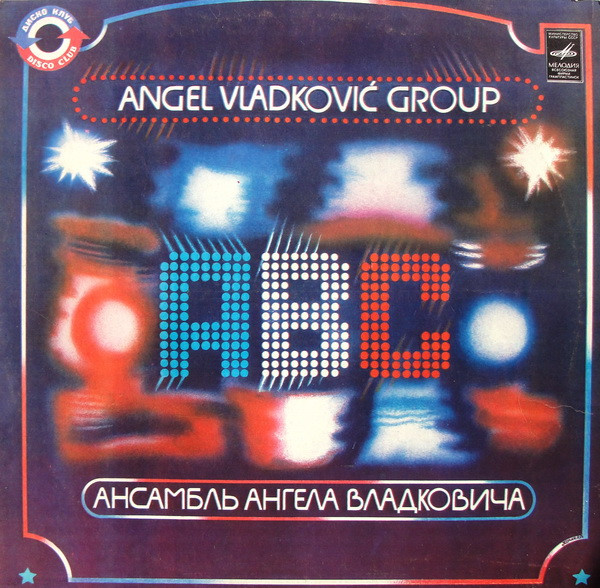
By 1981, ABC had fully pivoted. Their third Melodiya full-length landed on the label’s own Disco Club series — Melodiya’s dedicated outlet for disco releases — and the transformation is complete. The folk arrangements and psychedelic textures are gone, replaced by polished electronic disco production. The formula is recognisably the same though: Western covers (How Deep Is Your Love, Don’t Let Me Be Misunderstood, Let Your Love Flow) sitting alongside Yugoslav originals, including songs written by Marina Tucaković and Zdenko Runjić — two of the most significant songwriters in Yugoslav pop. Raimonds Pauls appears again too: a Latvian composer whose songs ABC returned to across a decade of Soviet releases, a thread that runs from the Riga pressing plant straight through their entire catalogue.
To understand why any of these records exist at all, you need to understand what Yugoslavia actually was. Deliberately neither Eastern Bloc nor Western, Yugoslavia under Tito had distanced itself from Soviet-style socialism while remaining open enough to access Eastern distribution networks that no Western artist could touch. Yugoslav citizens could travel freely, listen to Western radio, and buy imported records. Saturday Night Fever drew over 300,000 Yugoslav viewers to cinemas.
At the same time, Yugoslav artists could press records on Melodiya and distribute them east across the Iron Curtain. ABC existed in that gap. Notably, Melodiya reissued the work of some Yugoslav musicians without formal licence agreements from the original Yugoslav labels — meaning parts of this story existed in a legal grey zone that the Iron Curtain made possible, and nobody particularly policed.
The third record in my Latvian haul was Zoran Milivojević’s 1980 self-titled album on PGP RTB. By now, Yugoslavia is fully inside the Saturday Night Fever moment — disco-funk, Belgrade production, pressed in a first edition of only 2,000 copies. It’s not essential listening, and it doesn’t carry the novelty of a Soviet pressing. But as an artifact, it closes the loop: from a Belgrade ensemble navigating Soviet cultural gatekeepers in 1971, to a Belgrade artist making unambiguous disco nine years later, the border between East and West quietly dissolved into vinyl.
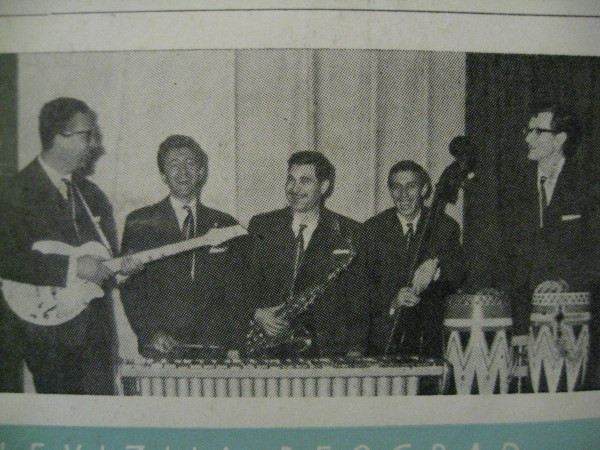
What I still don’t fully know is the complete shape of what’s out there. The Latvian store had these three. ABC alone accounts for at least five Soviet releases across a decade. Then there’s Sedmorica Mladih — one of the first beat groups in Yugoslavia, formed in Belgrade in 1959 — who had a record pressed at the Riga factory as early as 1963, and another Melodiya release in 1976. And somewhere out there is that 1981 Disco Club pressing I haven’t found yet. How many other Yugoslav artists made it onto Soviet vinyl? How many pressings are sitting in shops and collections across the former Eastern Bloc, undocumented, uncatalogued, unreviewed in any language? Perhaps Discogs already holds the complete picture — but still, we can hope for a lost gem.
This music is underwritten even within Ex-YU circles. In English, it barely exists on the page at all. If you know of a record, a store, a collection — I want to hear about it.
Source Sineokyj, O. (2013). Communication Process of Creating Regional Music Industry (Case study: former Yugoslavia). Informatologia, 46(1), 45–53. Available at: https://hrcak.srce.hr/file/147476