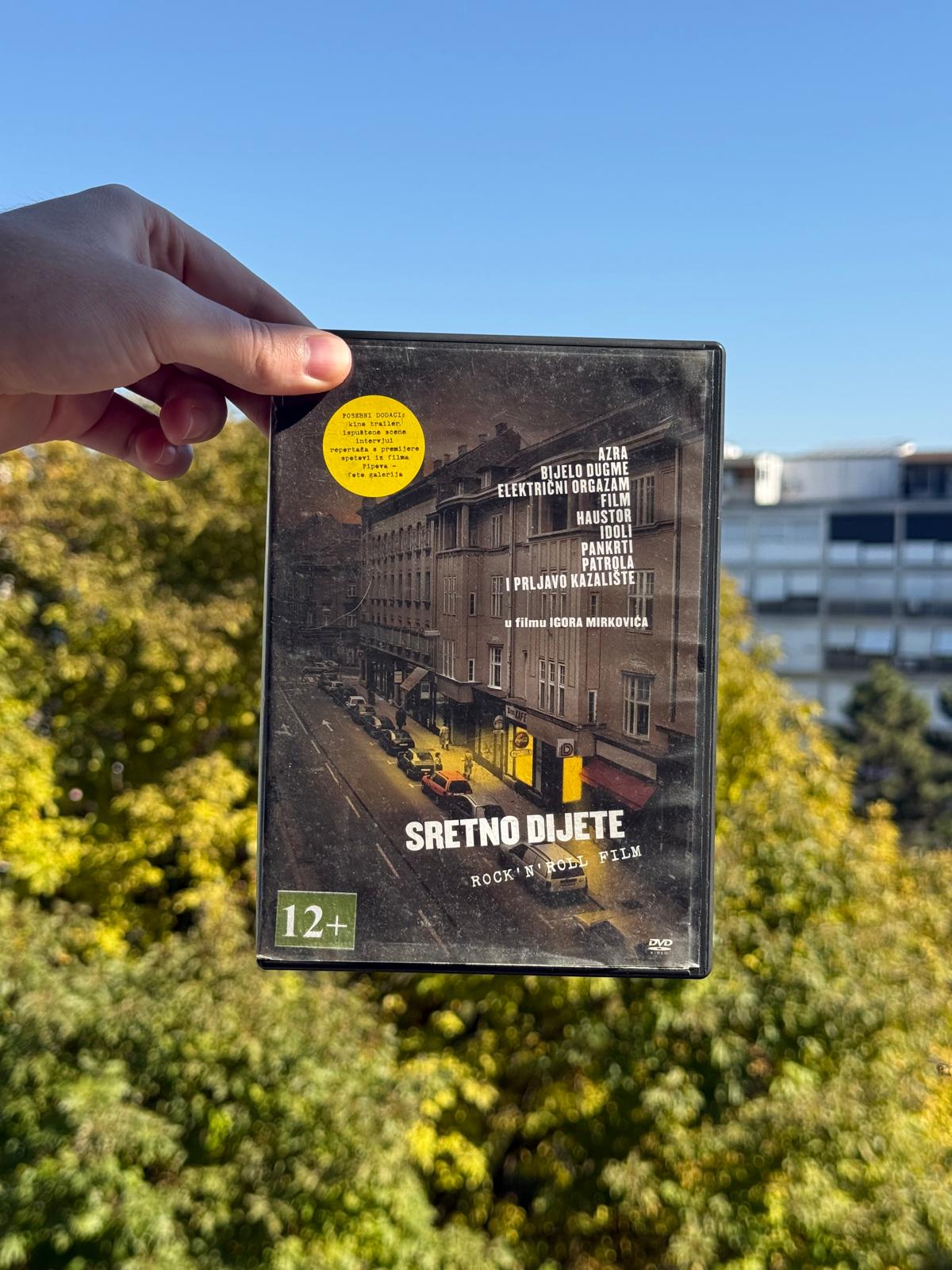
Sretno dijete has eluded me for a while now. I could never find a copy with English subtitles, and my Croatian isn’t yet good enough to follow a full documentary. But a few days ago, a friend found a DVD in a Zagreb library, and yesterday we finally got a chance to watch it in full on the PlayStation.
If I’m being honest, I’ve not watched a DVD in years, and the nostalgia started as soon as I opened the menu screen: choosing subtitles, the little animation when you press play. After years of streaming, using a physical copy of something feels meaningful again. In a lot of ways we’ve come full circle, and it’s a big part of why I love collecting records and CDs.
The film
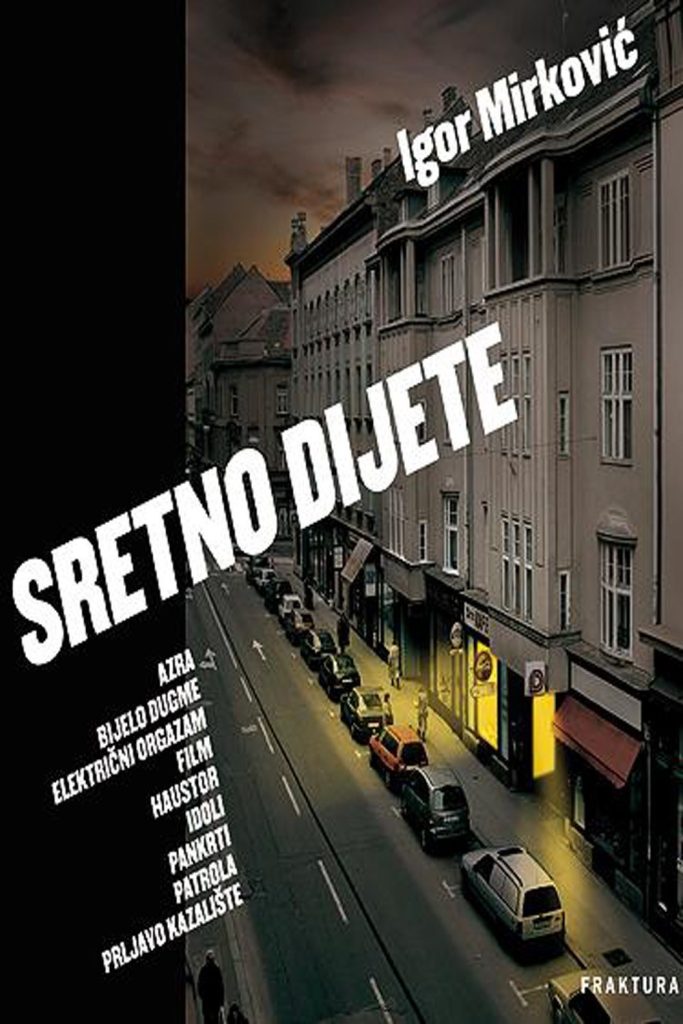
Igor Mirković’s Sretno dijete (“Happy Child”, 2003) tells the story of the Yugoslav punk and new wave (Novi val) scene he grew up alongside, through concert footage, interviews, music videos and archival film of Prljavo kazalište, Haustor, Idoli, Azra, Pankrti and more. His affection for the scene is both infectious and charming.
It’s also much funnier than I expected. At one point, the crew travel all the way to Utrecht to find Džoni Štulić, only to discover he’s away for a week and won’t speak to them.
The ending is my favourite part. As power cuts roll across Yugoslavia, the film shows that the scene’s restless energy couldn’t simply be switched off. It cuts between people playing whatever they can without electricity: acoustic guitars, fingers tapping on tables, a kazoo, a girl asleep with her flute. It’s funny, but also genuinely cinematic, and a perfect final image for a generation that refused to sit still.
My one criticism is how few women appear. It’s Mirković’s personal story, and the scene itself was heavily male, so the film may simply mirror that imbalance. But Novi val wasn’t only made by men. Marina Perazić was the face of Denis i Denis, Videosex were fronted by Anja Rupel, and Vim Cola, who later took over vocals in Paraf, became one of the most prominent punk frontwomen in the region. It would have been good to see them recognised.
Nostalgia for something I never lived
Watching it, I recognised a feeling I’ve had for years. My parents grew up with the Manchester scene around Factory Records: Joy Division, the Durutti Column, later Happy Mondays. I’ve always been slightly jealous of that. Sretno dijete brought the same feeling back: I wish I’d been at Azra’s early gigs, at Idoli’s breakthrough, at a Joy Division show. There’s even a word for it, anemoia: nostalgia for a time you never lived through.
Documentaries like this are the closest we can get to the atmosphere and the energy of those scenes, and for that I’m grateful. They help us understand our parents’ youth, and a golden period in music on both sides of Europe.
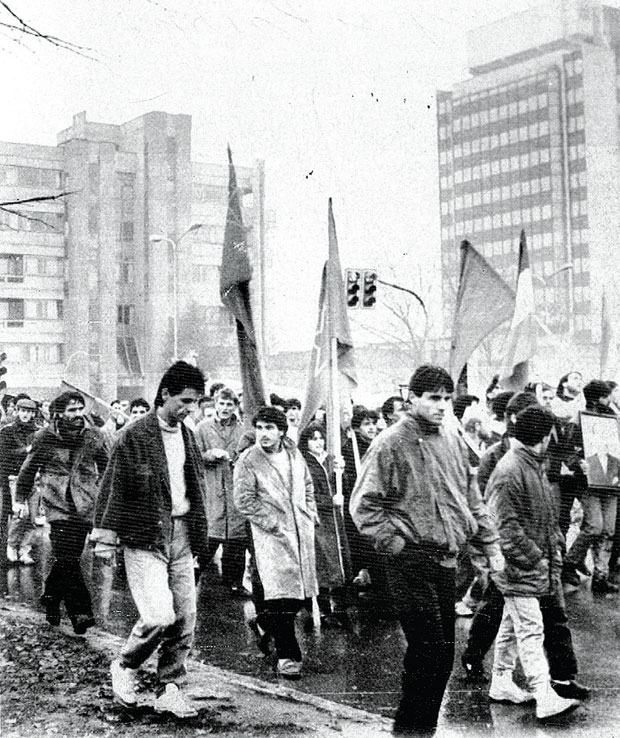
Of course, it’s easy to romanticise from a distance. The same years brought inflation, shortages and the power cuts the film itself plays for laughs, and the generation who grew up on Novi val went on to live through the wars of the 1990s.
Why doesn’t it feel like this now?
After the film, my friends and I ended up in a conversation we’ve had many times. Every older generation seems to have had its scene: our grandparents had Beatlemania and the Stones, our parents had Novi val, post-punk and the Cure, and the 90s kids had grunge and alt-rock. So what did we get?
Of course, Novi val probably didn’t feel like a generation-defining movement to most people at the time. Plenty of Yugoslavia was listening to folk and Bijelo Dugme. Scenes look biggest in hindsight, and films like Sretno dijete are part of how they get that way.
One friend put it down to the Yugoslav factor: after the break-up, it was never the same. They have a point. A shared market of over 20 million people split into small national ones, with war and emigration on top. But you hear the same complaint in the UK, where nothing broke up: no new bands, no scenes, music isn’t what it was. I think that’s only partly right.
The scenes exist. The myth-making doesn’t.
The bands are there, and this site is full of them. There’s an underground scene in Skopje, hardcore in Belgrade, alternative folk coming out of Ljubljana, and artists like Lufthansa, Repetitor, Širom, Manja Ristić, and Nemeček making some of the most interesting music in the region. What’s missing isn’t the quality of music, but perhaps a closer connection.
What Sretno dijete makes obvious is how much of the legend was built by the people around the bands. Magazines like Polet in Zagreb and Džuboks in Belgrade followed the scene into its cafés and bars, wrote about the characters as much as the records, and helped turn people like Džoni Štulić and Jura Stublić into myths. And much of that infrastructure was supported rather than commercial: Polet was a youth paper published by the Socialist Youth League, and places like Belgrade’s SKC gave young bands somewhere to play and be seen.
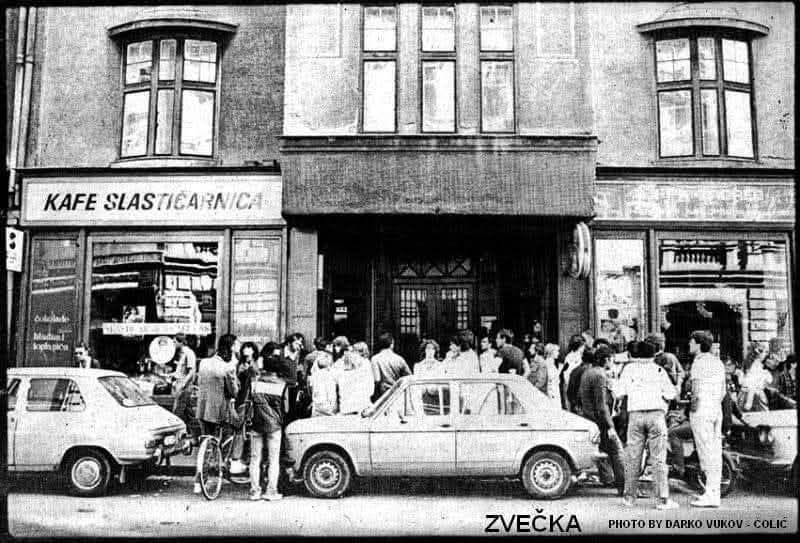
In Zagreb, much of that happened between a handful of places. By night there was Kulušić, the club where the bands played. In the film, Film seem to be on its stage almost constantly, and it was Zagreb’s answer to Manchester’s Haçienda. By day there were the cafés: Kavkaz, Blato, and above all Zvečka, which for Mirković and many others was the centre of it all, fuelled by coffee rather than booze. They were where bands met, where journalists found their stories, and where a teenager could sit a few tables away from the people on his record sleeves.
Today, most of us discover music through playlists and short-form video, curated by algorithms that reward whatever keeps people scrolling rather than experimentation or counter-culture. You find a song before you find a scene, and a band you’d once have stumbled on in a sweaty basement is now just a 15-second clip between adverts. The economics have changed too: with little support behind them, a solo artist with a laptop is cheaper to run and easier to sustain than a four-piece band crammed into a van.
None of that makes the music worse, and the same internet is how someone in Brazil ends up falling for Yugoslav new wave. But it makes scenes harder to see. People are still writing about them, from London’s Windmill bands to the underground in Skopje, but they reach a fraction of the audience Polet once did.
So maybe we weren’t born in the wrong generation. Maybe our generation’s Sretno dijete is happening right now, in small venues in Skopje, Belgrade and Ljubljana, and is just waiting for someone to tell its story.