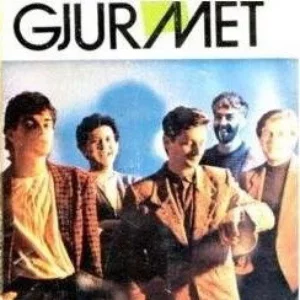
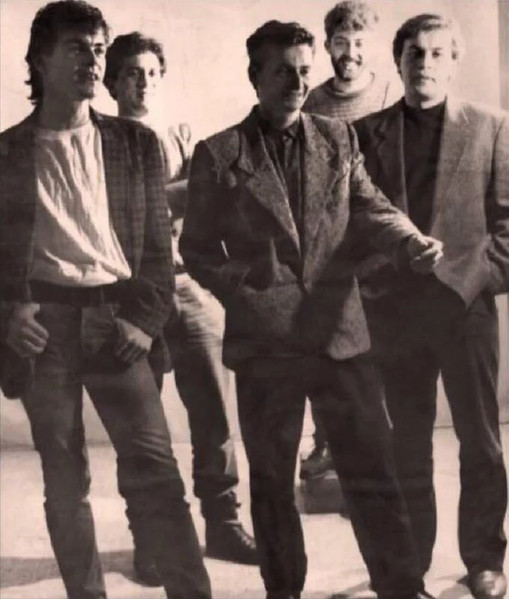
Starting the Kosovo series with the band that, perhaps more than any other, built the foundation for it; Gjurmët are the anchor of Kosovo’s 1980s music scene, and one of the first Albanian rock bands formed by Kosovo Albanians, as well as the first new wave band to come out of SAP Kosovo. They were formed in Prishtina in 1980 by Migjen Kelmendi — vocals and guitar, and son of writer and journalist Ramiz Kelmendi — inspired by the Novi Val wave spreading across the rest of Yugoslavia at the time. The rest of the lineup was Armando Gjini on piano and synths, Tomor Kurshumliu on bass, Gazmend Hasbahta and Bekim Dyla on guitars, and Petrit Riza on drums.
Getting this album released was its own story. A 1982 recording called Karrigat was refused broadcast by RTV Prishtina specifically over its open criticism of the bureaucratic, repressive system around it, and the album’s own cover ran into similar trouble — originally shot with dancers performing the traditional Albanian eagle dance, it was eventually released with a plain band photo instead, Kelmendi pictured checking his wrist as a quiet nod to how long the delay had dragged on. Mikrofoni, elsewhere on the record, took aim at the same system’s efforts to curb the liberties of Kosovo Albanians more broadly.
Musically, it’s a genuinely distinctive mix of new wave, pop rock, post-punk and Albanian folk. Kur Dielli Perëndon opens things in catchy, pop-oriented territory — synth-heavy, slightly dark and soulful, less angular than most new wave of the era. It’s closer to pop rock than anything, which makes me wonder about acts like Plavi orkestar getting saddled with the “New Primitives” label when they don’t really sound the part either — Gjurmët sit in a similar space, folk-inflected but fundamentally pop at heart.
N’tren Për Perzeren and Një Grusht Qershi both work that same soulful pop-rock vein — acoustic guitar, warm and catchy vocals, a touch of a more sophisticated pop-rock style. N’tren Për Perzeren is the stronger of the two by some distance; the chorus is genuinely incredible, one I still have on repeat. Një Grusht Qershi covers similar ground without quite the same spark, though it’s still a catchy, nostalgic listen in its own right.
Rrezet Thehen Në Sytë E Tu Të Zezë is where the record’s fusion really clicks — more new wave in spirit, angular basslines, uptempo drumming, but still rooted in that Albanian folk and pop-rock vocal identity. It’s a real fusion rather than a compromise between the two, and honestly not something I’d heard done quite like this before — rooted in its own musical history while staying accessible.
Era, reportedly the most-streamed track from the album today, is a lovely change of pace — soft piano, a soulful pop-rock ballad with a genuinely nice guitar solo. Të Shtrirë Mbi Kanape closes things out in darker, more mysterious new wave territory, and does it well enough to make the case that this album’s back half is stronger than its reputation might suggest.
Only one album ever came from this lineup — Gjurmët split in 1986 when Kelmendi was called up for mandatory military service. They reunited briefly in 1988 to record Heroi i Qytetit Pa Lum (“Hero of the Riverless City”), a title referencing Prishtina’s two rivers, Vellusha and Prishtevka, both culverted underground during the city’s rapid postwar expansion, before reforming and splitting several more times over the following decades and eventually putting out a compilation of their ’80s material in 2002.
For a band this historically important, it would be easy for the music itself to feel like an afterthought, but it doesn’t. This is a genuinely enjoyable, distinctive record, even if it’s a little front-loaded with its strongest hooks before easing off in the middle — the closing stretch claws that back convincingly. Gjurmët earned their place as Kosovo’s foundational band on more than just timing.
Explore more from Prishtina on the EX-YU Music Archive. Rate Gjurmët and discover the rest of the city’s scene as the series continues.