For my 100th review on this site, I wanted to pick something special. Not necessarily something successful, or even widely known, but something massively underrated and beautiful.
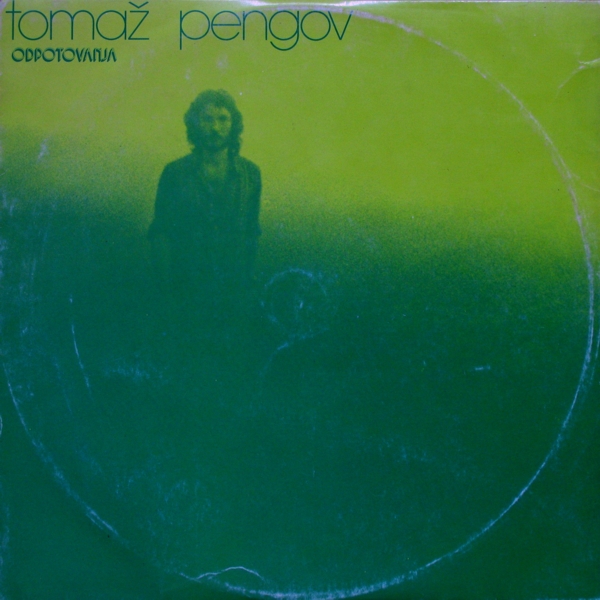
Pengov recorded Odpotovanja in 1973, in his flat on Prešernova street in Ljubljana, while he was still a student. It was self-released through the student press at ŠKUC, and it’s generally cited as the first independently released album in former Yugoslavia. None of that history matters much once the record is actually playing, and you’ll see why later, but it’s worth knowing going in.
One of my favourite artists is Nick Drake, loved for his simple acoustic guitar and singer-songwriting style that’s perfect for slowing the world down, for cloud-watching, for reminiscing, and for reading. I get something similar from Leonard Cohen’s pastoral debut, Songs of Leonard Cohen, another favourite also full of introspective melancholy. Odpotovanja gives me that same feeling. The songs are simple in essence, but they’re filled with so much heart and soul that they’re anything but shallow.
Pengov himself isn’t a widely recognised name — maybe in Slovenia, among people who really love music, but not much beyond that. Much like Nick Drake, he didn’t experience commercial success in his lifetime. And similarly still, he made something extraordinary anyway.
I won’t translate the lyrics for this review. I’m not the guy for that, and I don’t think I need to — the singing tells you everything, the notes and the 12-string guitar carry the whole story. Much like a good book, the emotion conveyed is relatable, the meaning might be different, but the emotion is shared.
Across its run, the record moves through contemporary folk, chamber folk, and singer-songwriter forms, with the longer closing pieces drifting into more exploratory territory.
Opener Cesta is the most Nick Drake-sounding moment on the record — lush, hopeful, pastoral guitar with a real autumnal feel.
Danaja might be the most beautiful track here. It’s more melancholic than Cesta, but there’s so much soul and weight inside that melancholy that it can bring you to tears, not because the song is sad, but because it’s beautiful enough to pull old memories loose.
V nasmehu nekega dneva and Druga jesen carry the same melancholic flavour, slightly more uptempo but still wistful. These feel like the kind of songs that bring people together, the ones someone ends up singing with after a few drinks, when someone has a guitar and everyone just listens, fully in the moment.
The second half features some longer and more exploratory tracks; Oče is over 7 minutes in length, consisting mostly of a lush acoustic guitar instrumental piece. Sarkofagi features some choral backing vocals that add an ethereal, dreamy atmosphere to the record. It concludes with Epistola which again feels quite Nick Drake in style, it’s not so melancholic, rather it feels wistful, slightly psychedelic and mellow.
I listened to this record most recently on the drive down to Split, sun out, motorway full of traffic which would normally have me baring my teeth. But, Odpotovanja has a way of slowing life down. It gave me real solace in the midst of summer chaos, and not many records can do that.
It’s a beautiful record. There’s no other way to put it, and I don’t think you need the lyrics translated to feel that. In the Ex-YU canon there are a handful of albums I’d call 10/10: Haustor’s Bolero, Time’s self-titled, Azra’s Filigranski, and this one belongs right there with them.
Odpotovanja is far from an obvious choice, but it’s the right one for my 100th review milestone. I don’t encourage people to listen to everything, but if you have time for one record, then let it be this one. It’s accessible, warm, and you don’t need a grasp of the language.