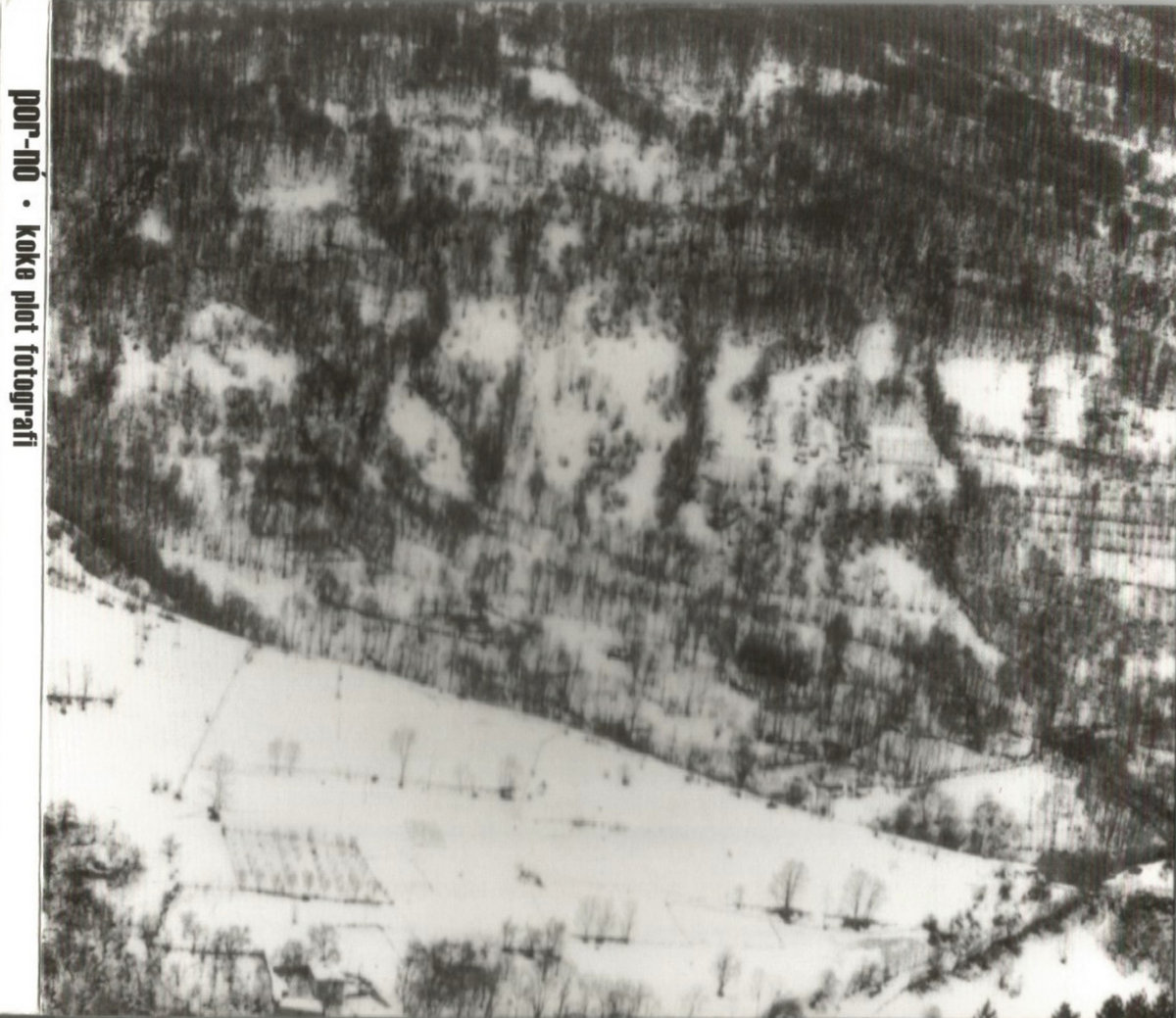
This is the first record from Kosovo that I spent a significant amount of time with, and it’s a great entry point into the post-war Prishtina sound. The record is right up my alley in terms of style and sound, leading to several repeated listens. The album cover consists of a grey, snowy image that could easily pass for a black metal sleeve. The music matches the imagery; Kokë Plot Fotografi is a cold, wintry record: dark, slightly mysterious, even isolating in places, but still beautiful.
por-nó were one of the first Kosovo bands to emerge after the war, and they helped build the urban underground scene that grew in Prishtina in the early 2000s. They were never really a band in the traditional sense, rather describing themselves as a musical community of rotating musicians and multi-instrumentalists. They started as a trio of percussion, bass and monophonic synths before developing into an interchangeable songwriting unit. Live, they were known for loud, improvised, erratic performances, which tracks for a group this focused on atmosphere and progression.
The lineup here is Dritëro Nikqi on guitar, vocals, electric piano, synths and programming; Rron Qena on djembe, tabla and goblet drum; Nesim Maxhuni and John Smith on drums; and Visar Kuçi on violin, bass and guitar. Kuçi would go on to lead his own jazz trio, which we’ll come back to later in this series.
In the winter of 2004–05, photographer and writer Stu Sherman met Nikqi (“Ditro”) in the Prishtina studio where he’d produced the album, on New Year’s Eve, with fireworks and the occasional celebratory gunshot going off outside. Nikqi had fled to Budapest the day the NATO bombing began in 1999, then on to Skopje. What stuck with him most was what came after. People “wouldn’t talk about what happened, wouldn’t tell their stories,” he told Sherman. “That denial still exists today. It’s like they want to start over and erase ten years.” You can hear some of that in this record: the loneliness, the confusion, the grief.
Bilete kthyese opens the album with swirling synths and a gently plucked guitar, creating a dense, foggy atmosphere that carries through the rest of the record. Telefoni then fuses post-rock with alt-rock. It’s a darker Radiohead: delicate hi-hats, technical drumming, eerie violin under softly delivered vocals. Textured, layered, full of melancholy, before expanding halfway through into something sludgier and heavier, almost metal, not far off Block Out. The drumming is the standout. Deshira per oksigjen focuses purely on a progressive atmosphere, almost Talk Talk, texture and space first, before a beautiful saxophone carries it into jazz-rock territory.
Ngjyrat e TV is darker 90s/00s alt-rock: heavy, loud drums that, paired with djembe or tabla, sound like two percussionists working at once. My one complaint: the noisy instrumentation sometimes buries the vocals. That rawness shows even more on Marijanda kakakolla / Une mo nuk votoj. The muffled, distorted vocals are clearly intentional and work stylistically, but this is where the limits of the production are hardest to get past. Hard to be too critical, though, given when and where this was recorded.
Mir’mjes is entirely instrumental: progressive, almost ambient, lovely hand percussion (goblet drum, I think) carrying it along. Pure post-rock: soothing, technical, atmospheric, and one of the record’s genuine highlights.
Koke plot, the title track, feels distinctly of its era, a fusion of downtempo, dub and neo-psychedelia with alt-rock that sounds like nothing else on the record. It’s a genuinely good one, and a fitting song to lend the album its name.
Across these tracks, Por-Nó move between alt-rock, post-rock and jazz-rock in a way that feels accomplished and natural, never forced. The production is raw in places, but the arrangements are rich and the mood never slips. Like the best post-rock and progressive records, it rewards replaying. A different track pulls you in each time. A cold, dark, quietly beautiful record, and a fine introduction to what Prishtina’s post-war underground sounded like.
Explore more from Prishtina on the EX-YU Music Archive. Rate por-nó and discover the rest of the city’s scene as the series continues.
Sources: Kosovo’s Burning: Punk Rock and Albanian Rap in a War Zone, Anthem Magazine, Stu Sherman.