Laibach’s self-titled debut occupies a very different world from the more accessible bombast of Opus Dei. Where that later record filtered industrial music through recognisable pop structures, classical references, and irony, Laibach is far harsher and more confrontational — an abrasive, rhythm-heavy work built around repetition, atmosphere, and intimidation.
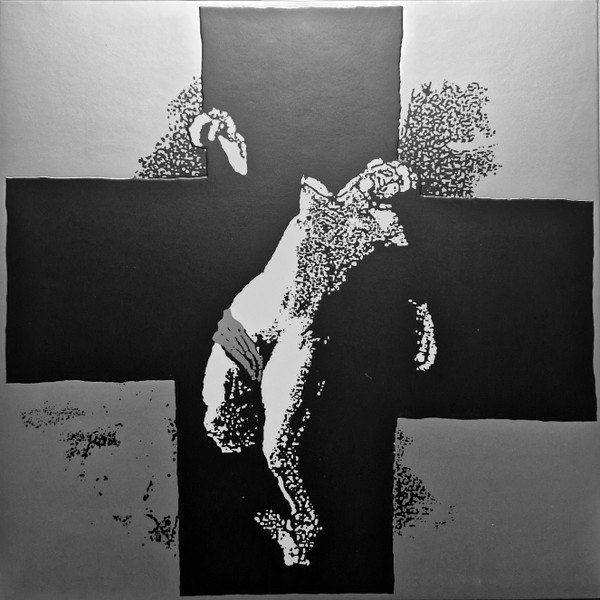
Released during a period when the group’s very name was banned by Yugoslav authorities, the album arrived without text on its cover, featuring only Laibach’s now-iconic black cross symbol. That tension between provocation, performance, and political unease runs through the entire record.
From the opening moments, the album establishes a sound rooted in martial industrial repetition. Cari amici soldati is genuinely unsettling — its repeated lines (“Cari amici soldati / I tempi della pace / Sono / Passati!”) delivered with a cold, haunting, ritualistic intensity that feels closer to political theatre than conventional rock music.
Tracks like Sila and Sredi bojev push even further into hypnotic repetition. Heavy drums, mechanical rhythms, synth textures, and indistinct spoken-word passages create an atmosphere that feels oppressive and claustrophobic. Sredi bojev, stretching beyond eight minutes, becomes almost trance-like in its monotony — dark, cultish, and deliberately alienating — attempting to overwhelm the listener psychologically.
That aesthetic reaches one of its strongest forms on Država, where martial brass arrangements and rigid rhythms create something grandiose yet deeply dystopian. The track captures Laibach’s central tension particularly well. Elsewhere, NY 1984 and Prva TV generacija introduce more electronic and experimental elements, blending abrasive synth passages with fragmented spoken samples and moments of near free-jazz chaos.
By the album’s final section, the music begins to resemble a soundtrack more than a traditional rock LP. The closing tracks feel ceremonial and performative, as though accompanying some vast industrial ritual or authoritarian parade. One Plus One (1+1) ends the record on one of its most atmospheric moments — damp, mechanical, and strangely immersive — while also hinting toward the more refined direction Laibach would later pursue.
As a historical document, Laibach is undeniably important. Its influence on martial industrial music is difficult to overstate, and many of the themes and aesthetics that would later define the band are already present here in raw form. At the same time, the album’s hour-long runtime and relentless repetition make it a demanding listen. Even approaching it with familiarity toward Laibach’s later work, much of the middle section feels monotonous and difficult to return to.
Ultimately, Laibach is more compelling as an artistic statement than as a consistently engaging album. Its strongest moments are genuinely fascinating — oppressive, theatrical, and uniquely unsettling — but the record’s length and uniformity prevent it from fully sustaining its impact.