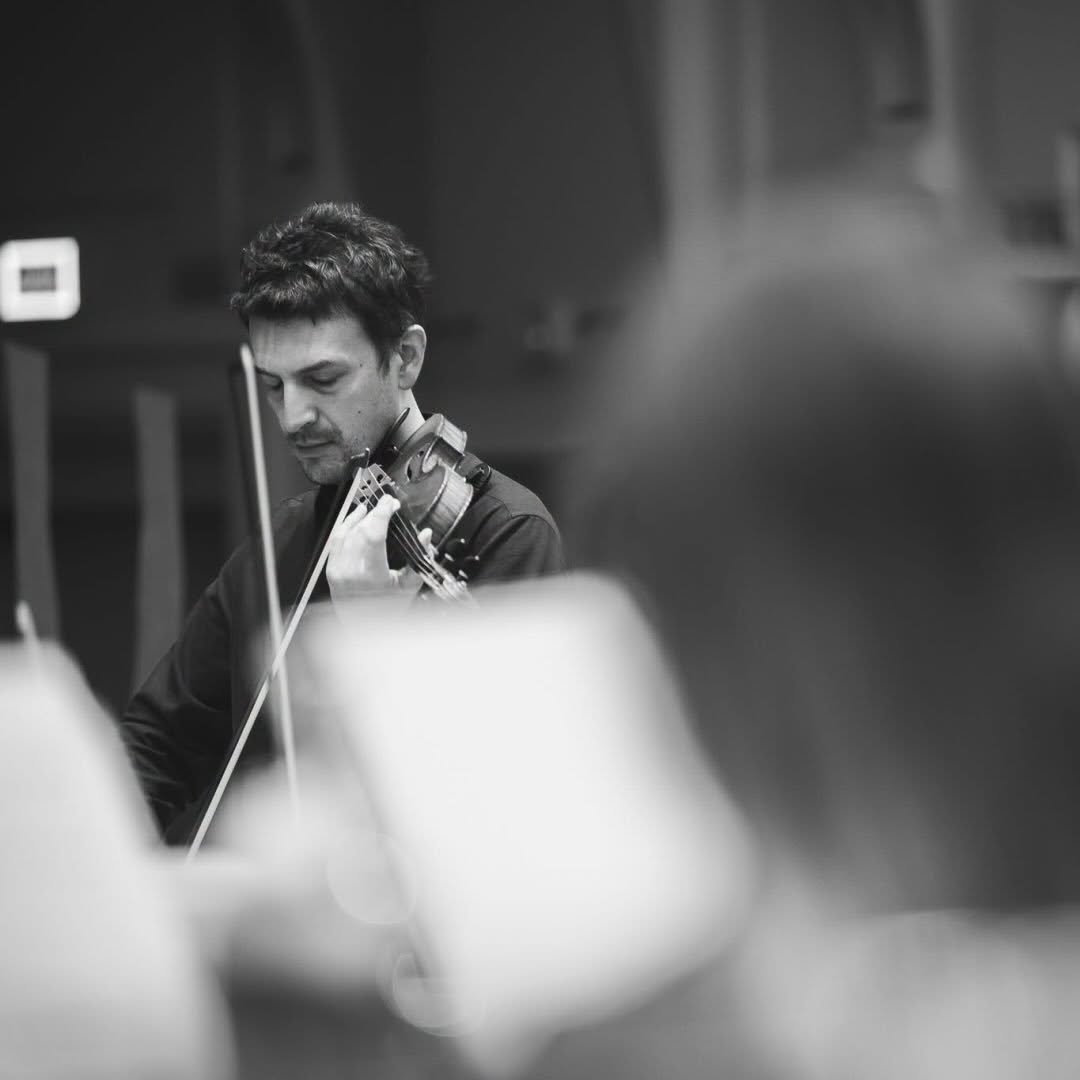
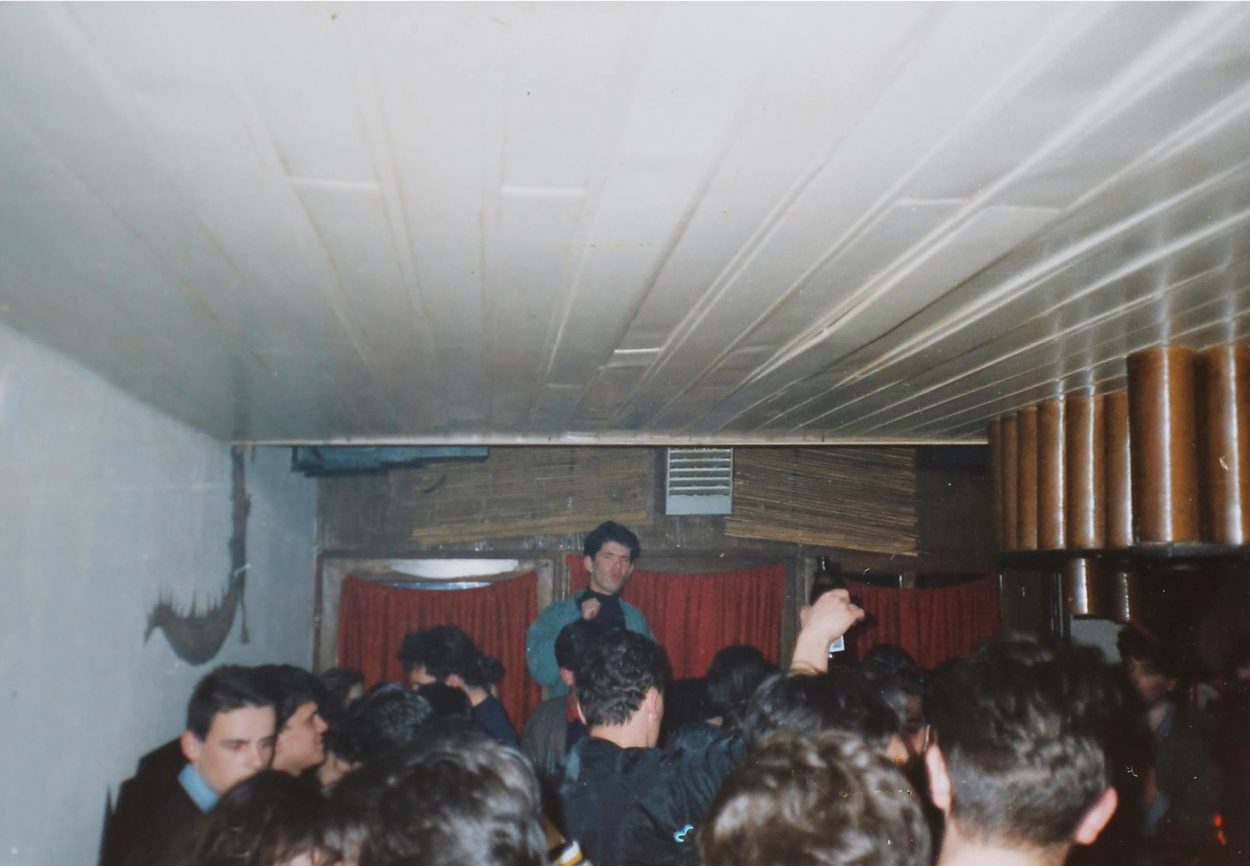
Photo from Kurrizi documentary.
Our guide to Prishtina’s music, Songs from the Riverless City, told the story of a scene shaped by politics, lost archives, and underground clubs. This list will tell you where to start listening.
We’ve picked 15 albums that tell Prishtina’s story. From the Queen of Albanian music, Nexhmije Pagarusha, to the Yugoslav-era rock of Gjurmët and TNT, through the parallel scene of the 90s and the alternative bands of the 2000s, to the jazz, metal, and post-punk coming out of Kosovo today. There are classics, obscurities, and a few modern ones to watch.
Read to the end to find our honourable mentions.
1. Gjurmët – Gjurmët
Gjurmët are the anchor of Kosovo’s 1980s music scene, and one of the first Albanian rock bands formed by Kosovo Albanians, as well as the first new wave band to come out of SAP Kosovo. They were formed in Prishtina in 1980 by Migjen Kelmendi — vocals and guitar, and son of writer and journalist Ramiz Kelmendi — inspired by the Novi Val wave spreading across the rest of Yugoslavia at the time. The rest of the lineup was Armando Gjini on piano and synths, Tomor Kurshumliu on bass, Gazmend Hasbahta and Bekim Dyla on guitars, and Petrit Riza on drums.
Getting this album released was its own story. A 1982 recording called Karrigat was refused broadcast by RTV Prishtina specifically over its open criticism of the bureaucratic, repressive system around it, and the album’s own cover ran into similar trouble — originally shot with dancers performing the traditional Albanian eagle dance, it was eventually released with a plain band photo instead, Kelmendi pictured checking his wrist as a quiet nod to how long the delay had dragged on. Mikrofoni, elsewhere on the record, took aim at the same system’s efforts to curb the liberties of Kosovo Albanians more broadly.
Musically, it’s a genuinely distinctive mix of new wave, pop rock, post-punk and Albanian folk. Kur Dielli Perëndon opens things in catchy, pop-oriented territory — synth-heavy, slightly dark and soulful, less angular than most new wave of the era. It’s closer to pop rock than anything, which makes me wonder about acts like Plavi orkestar getting saddled with the “New Primitives” label when they don’t really sound the part either — Gjurmët sit in a similar space, folk-inflected but fundamentally pop at heart.
2. por-nó – Kokë plot fotografi
This is the first record from Kosovo that I spent a significant amount of time with, and it’s a great entry point into the post-war Prishtina sound. The record is right up my alley in terms of style and sound, leading to several repeated listens. The album cover consists of a grey, snowy image that could easily pass for a black metal sleeve. The music matches the imagery; Kokë Plot Fotografi is a cold, wintry record: dark, slightly mysterious, even isolating in places, but still beautiful.
3. Lindja – Lindja
Lindja, formed in 1983, represented the scene’s experimental side. They were more punk and took their lead from Idoli, Pekinška Patka and Paraf. But they never got a studio album — their songs survived only as RTP recordings and videos, and were collected on an album after the Kosovo war.
4. The Milksnatchers – Pulse and Pebbles
Moving forward into the present day, we have The Milksnatchers. No album yet, but this four-track EP is a really nice set: post-punk revival crossed with art rock and indie, all sung in English. PRlude has everything: a tense bassline and angular drums that build for a minute before swirling synths, dreamy guitar and shimmering cymbals take over. The vocals are warm but detached, a bit like Paul Banks of Interpol.
Antoine’s Dream is dreamier and more layered, close to the technical, artful post-punk coming out of Skopje right now, while Bruto adds a heavier bassline, groovy keys and some tongue-in-cheek vocals. A strong debut; would love to hear a full album.
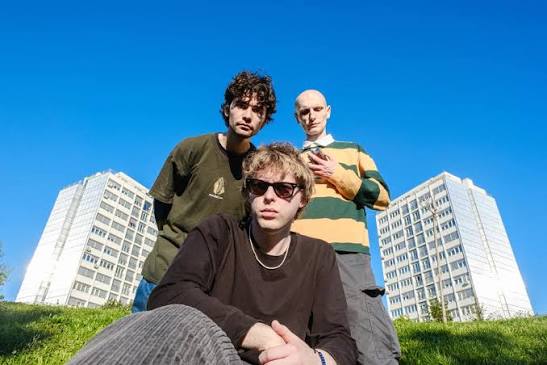
5. Retrovizorja – Polaroid
Experimental, arty and atmospheric: alternative rock that’s airy and warm rather than gritty, more about textures and layering, as on N’Korridor. Things get darker from there. 1999 brings dub and trip hop undertones with slow, almost slurred vocals, and the title track adds jagged tension, with tightly plucked guitar, whirring bass synths and vocals whispered as if through a radio.
The second half gets more experimental and electronic: Disko thumps and swirls, and Hajdi motra, moni vllazen leans fully into dub. Andrra is the highlight, six-plus minutes of dreamy, ambient post-rock not far from Por-nó. Fittingly for such a hard-to-find record, the opener Karabishti seems to have vanished from the internet entirely.
6. Tetris – Tetris Recording Sessions 2009-2019
Ten years of live, improvised recordings from Tetris, a Kosovo art collective built around Vigan Nimani, Edmond Krasniqi, Burim Gora, Bujar Sylejmani, Arif Muharremi and Dritëro Nikqi, plus a rotating cast of guests. The music ranges from IDM and ambient to a kind of space electronic, in the vein of Miha Kralj. A really cool listen if you enjoy the outer realms of electronic music.
7. Nexhmije Pagarusha – Nexhmije Pagarusha
Known in Kosovo as the “Queen of Albanian music”, Pagarusha is absolutely essential. She became Radio Prishtina’s soloist at 14, back when the station had three rooms and no recording equipment, and when a young woman singing on the radio was considered shameful. Over the next four decades she moved between folk, opera and pop, toured the world and sang at Jugovizija. Remarkably, her last album arrived in 2013, when she was nearly 80. It collects 15 songs, including her signature “Baresha”, written by her husband, Rexho Mulliqi.
8. NR – Egjeli
The landmark Kosovo hip hop record, and the one that broke the rules. Earlier Albanian rappers used standard Tosk, the language of newspapers and books. NR rapped in Prishtina’s own Gheg dialect, swore on record, and went after UNMIK and the post-war politicians, and Albanian rap has been made that way ever since.
You don’t need to speak Albanian to feel it: it’s gritty, urban gangster hip hop, with samples ranging from Herbie Hancock to James Bond. As BimBimma put it: “I see hip hop as journalism.”
9. Visar Kuçi Trio – Departures
Guitarist Visar Kuçi, who played with Por-nó in the 2000s, leads a trio with Enver Muhamedi on double bass and Enes Bajramliqi on drums and tupan, the traditional Balkan bass drum. It’s a jazz record, but traces of Prishtina’s 2000s rock scene run through Kuçi’s guitar, which is warm and atmospheric, almost post-rock at times, but tense too.
Read our interview with Visar for his take on the scene, and the five records he’d hand anyone.
10. Cute Babulja – Cute Babulja
One of the 2000s bands Visar Kuçi singles out, and the project of singer-songwriter Genc Salihu with drummer Enes Bajramliqi, who later played on Departures. It’s abstract, strange rock driven by folk and jazz, with hints of cabaret alongside softer, acoustic moments. Think Tom Waits by way of alt-rock 00s Prishtina.
11. The Bloody Foreigners – Oh, Oh, Oh
Formed in London by Kosovars who left as teenagers in 1998 and named after the “foreign blood” jibes they grew up with, The Bloody Foreigners make satirical songs aimed at machismo and hypocrisy back home. The music kicks off with jagged, high-tempo art punk, not far from what’s coming out of Skopje now, but there’s a deep psychedelic thread too: Pek Pek Pek has a King Gizzard-style feel, Oj Vashe is warm, summery neo-psychedelia, and Po Pe Merr has an almost Anatolian edge.
Katunare is the highlight, lush and acoustic before building into a big, warm crescendo. Iggy Pop played it on BBC radio in 2018.
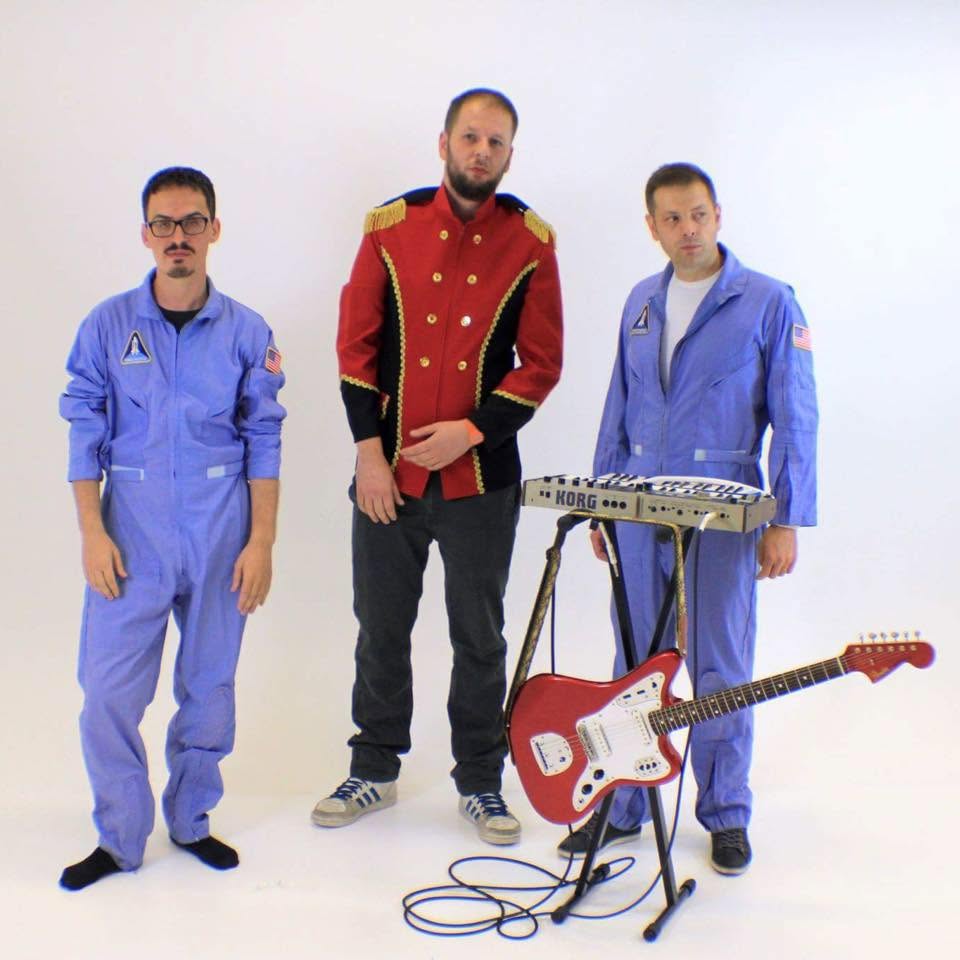
12. Frisson – Self.
Probably the pick of Kosovo’s metal crop, and the most unpredictable. It’s death doom at heart: very heavy, aggressive and hypnotic at times, with growled vocals and thumping drums. But it keeps veering into technical, extreme territory, with metalcore and post-hardcore in the mix and fast, hardcore-style vocals. Manufactured Reality is a real headbanger, especially the intro, and that’s before the chugging bassline kicks in.
13. Asgjë Sikur Dielli – Ndodhemi
Formed in Prishtina in the mid-90s, Asgjë Sikur Dielli are often called one of the most influential Albanian alternative rock bands, and their second album shows why. It’s darker alt rock infused with trip hop and downtempo: slow and atmospheric, but the guitars can still be heavy and the vocals are gritty and deep.
Koma plays around with different riffs and lighter twangs, and on Eho the vocals float off into Radiohead territory, though there are sludgier, darker moments too. The title track is the best here, no doubt: almost grizzly vocals and a very infectious guitar riff.
14. Elektorati Intelektual – Ai Tjetri
The surprise of the list. Opener Kosovsko is slow, dark and dingy, with chugging guitars and lots of reverb and distortion, closer to heavy psych than metal, and over seven minutes long. The second track is heavier and more punk, like Kyuss mixed with Electric Wizard, while Murri is abrasive industrial noise, hard to listen to but a sign of the band’s ingenuity.
The raw vocals can wear on the ears, but Sizifi brings back the stoner groove, and closer Lulja is beautiful: ten minutes of post-rock atmosphere, eerie melodic vocals and metallic industrial slams.
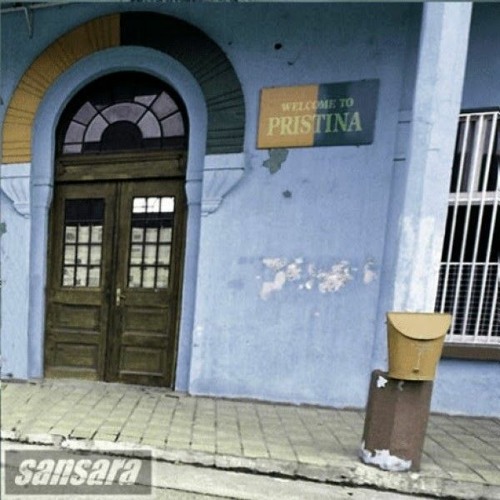
15. Sansara – Welcome To Prishtina
Formed in Prishtina in 1997, Sansara came together in the middle of the city’s hardest decade, and released their album Welcome To Pristina in 2003, a few years after the war. As we wrote in our guide to Prishtina’s music, the post-war years were when a new generation of bands started recording on their own terms, often shaped by whatever radio and CDs they could get their hands on. For Sansara, that clearly meant 90s Britpop and neo-psychedelia. But Welcome To Pristina is far more than an imitation.
The album kicks off with Ka Kohë Që Më Duhesh Ti, which is very 90s and 00s, with alt-rock guitars, Britpop vocals and tight drumming. The backing vocals almost have a 60s beat-group feel to them: very English, and a little cheesy! It’s slightly unserious and fun, but in a good, light and positive way, and it sets the tone for the record.
Bulevardi is a soft, warm pop-rock track with a surprising jazz and Latin touch. Then Banesa Në Katin E Parë continues in a similar way. It’s a bit like Pulp: poppy, jangly and light, but catchy and singable, with something of slacker rock about it too. Urban, jazzy and melancholic but warm, it’s one of my favourite tracks on the record.
16. Gillespie – Diku, Dikur…
A band from the 2000s scene, with a debut co-produced by Visar Kuçi, still making great records. Diku, dikur… (“Somewhere, sometime…”) is lighter in tone: indie rock with catchy, summery guitars and lovely female vocals, drawing on everything from 60s psychedelia to noise pop and post-rock. There are heavier moments, but it mostly stays dreamy and soft before building to bigger crescendos.
17. Taulant Mehmeti – Song to My Brother
Another one of Visar Kuçi’s five picks; Mehmeti gsew up playing guitar in wartime Kosovo, was mentored by Armend Xhaferi, and is now an established name on the New York jazz scene. This is his Balkan-jazz record, with trumpeter Ingrid Jensen guesting.
Honourable Mentions
- Muharrem Qena – Kolazh: a collection from the Mitrovica-born actor, director and singer-songwriter (1930–2006), who helped shape Albanian light music in Kosovo in the 60s. One of Visar Kuçi’s picks.
- Vivien (singles, 1980s): released various synthpop singles, fronted by the iconic late singer and journalist Violeta Rexhepagiqi and her brother Armend Rexhepagiqi.
- Marimanga Trio – Marimanga Trio: a Kosovo jazz trio from the Austrian club scene, fusing jazz with traditional music, with guitarist Armend Xhaferi and a guest spot from pianist Bojan Zulfikarpašić.
- Land of Confusion – The Morning Star: dark, melodic death metal and a real grower from 2021.
Want to keep exploring? Every album on this list, plus hundreds more from across the region, is browsable in the archive; our discovery tool for Balkan music. Start here!